No Image

Customer Service With A Smile Comes At A Big Price

July 7, 2014 0

Customer service with a smile is the American way, but faking it all day can take an emotional and physical toll once workers head home, according to a small but compelling new study published in the journal Personnel Psychology.

The findings should give employers pause about just how much they can fairly expect in terms of “emotional labor” — the requirement to display certain emotions or feelings toward customers, clients and others at work.

“[Employees] could smile because they genuinely like their customers or they are simply happy, and in that case they are not engaging in what we call ’emotional labor’ because they are not faking,” explained lead researcher David Wagner, Ph.D. of Singapore Management University, in an email to the Huffington Post. “When they put on that happy face but don’t really feel it — that’s when we start to have problems.”

Researchers observed 78 bus drivers who worked for one transit company in the northwestern United States. Over two weeks, the study participants answered surveys before work, after their shifts and just before they went to bed at night. They were asked about hours of sleep, their moods during and after work, and whether or not they had put on a “performance” or a “mask” that day.

Wagner found that when a bus driver wore a fake smile, he or she was more likely to suffer insomnia that night than someone who wasn’t faking it. Emotional acting was also linked to reports of feeling anxious or distressed, and also increased the likelihood of feeling emotionally exhausted at the end of the day. These people even reported more family conflict at home.

Meanwhile, people who reported behaving authentically — either by not faking smiles at all or by smiling because they genuinely felt happy — had much better sleep quality those nights.

Doug Pugh, Ph.D., chair of the Department of Management at Virginia Commonwealth University, wasn’t involved in the research, but his past research on emotional labor does appear in Wagner’s study. He praised Wagner for strengthening the study’s results by taking workers’ overall emotional stability into account when evaluating their responses, since an emotionally unstable person is more likely to report work and family distress generally.

But on a more fundamental level, Pugh thought the research was important because it accurately describes emotional labor as the difficult, draining work it is.

“The big point of all of this work on ’emotional labor’ — being friendly and pleasant and upbeat as part of your job — is that it is work,” wrote Pugh to HuffPost. “It is hard, and it drains people just like physical or mental labor might. But it is often unrecognized as ‘real’ work, so people don’t appreciate the difficult nature of this kind of ‘labor.'”

The sooner employers get on board with the notion of emotional labor as real work, the sooner they can start adequately compensating or rewarding workers for it, Pugh explained.

“Many skilled service workers take pride in their ability to use their emotions to manage and control difficult customers, much like a detective might take pride in his or her ability to use various emotion management strategies to manipulate criminal suspects,” Pugh explained. “Managers can also recognize these legitimate job demands, and the skills they require, and compensate appropriately.”

Once employers acknowledge the toll of emotional work, they can help their employees cope with simple changes like providing “offstage” areas for employees to relax and drop the mask, or training them about how pleasant behavior is a strategy that benefits them and the company.

“Good managers let employees know when it is OK to break character and drop the positive demeanor,” said Pugh. “Good managers also provide the support for employees so that the stresses of working customer-facing jobs don’t bleed over as much into the home.”

Of course, if that’s too hard, employers could simply drop the requirement to be a shiny, happy person all the time, said Wagner.

“In some countries there are no norms around faking positive displays (and those might just be the countries about which American tourists complain!), but the norm in the U.S. tends to be service with a smile,” Wagner acknowledged.

No Image

A Look At New England’s Ice Cream Stands, From Maine To Connecticut

July 7, 2014 0

From the coastal towns of Maine to the farm land of Connecticut, ice cream stands are spread all across New England. They bring communities together and bring joy to everyone who visits. Whether they’re seasonal enterprises or open all year round, these ice cream stands hold a lasting presence in New Englanders’ consciousness. They represent all the joys of summer: warm weather after a long, harsh New England winter, gathering with friends and family, enjoying the outdoors, and kicking back and relaxing.

As many ice cream stands as New England boasts, no two are alike. Their unique locations, compositions and individual histories are an integral part of each one’s character — and it is this diversity that makes the New England landscape so special. One ice cream stand might be based on a family-run dairy farm, and one might be a seaside shack open just a few months a year.

To New Englanders, ice cream stands are commonplace; they’re expected parts of the scenery. When summer rolls around, it goes without saying that your family will take frequent — even daily — trips to get waffle cones, sundaes and frappes (also known as milkshakes outside of New England). Ice cream is like part of the New England DNA — along with resilience, independence and the Patriots, or course.

It’s been a long winter and summer is finally here, so go out and get yourself some ice cream in true New England spirit. July just happens to be National Ice Cream month, so it couldn’t be a more perfect time to hit the road and check out some of the best ice cream that New England has to offer. Here are eight ice cream stands that represent some of the special flavor that ice cream brings to New England.

Salvador’s Ice Cream (Massachusetts)
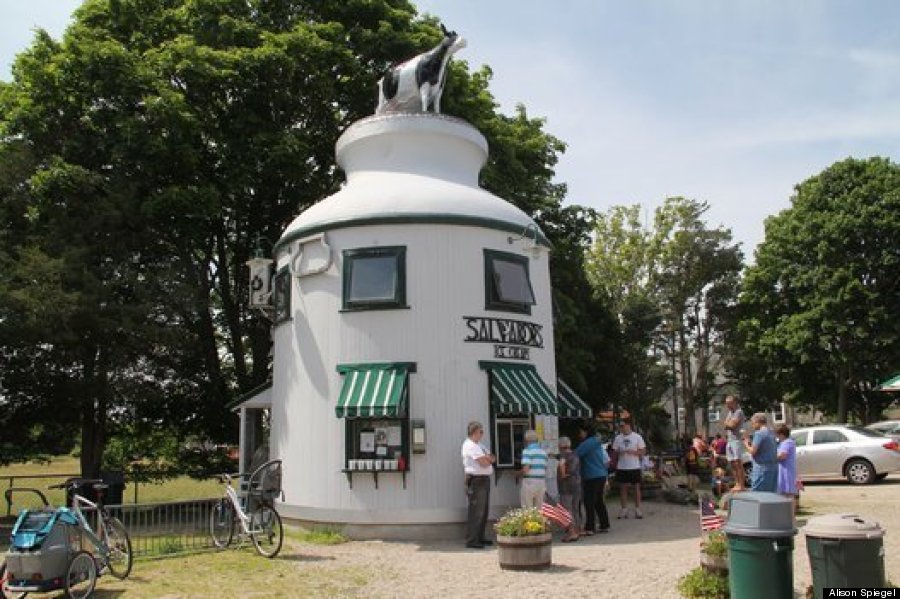
salvadors1
Salvador’s started as a dairy farm in 1890. The dairy building was originally located in New Bedford, MA, and in 1936 the milk jug was moved to Smith Neck road, a quiet residential street in Dartmouth, MA.

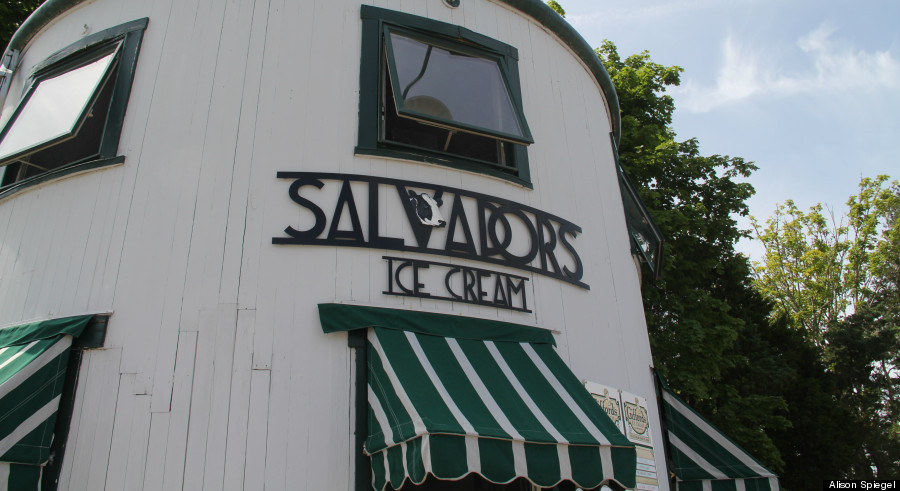
salvadors3
Ownership of Salvador’s has been passed on over the years, and the current owners, Len & Beth Gauvin, have received accolades from the New Bedford Historical Society for maintaining this historical structure. The cow on the top of the milk jug is named Smith Neck Nellie.

The Daily Scoop (Rhode Island)
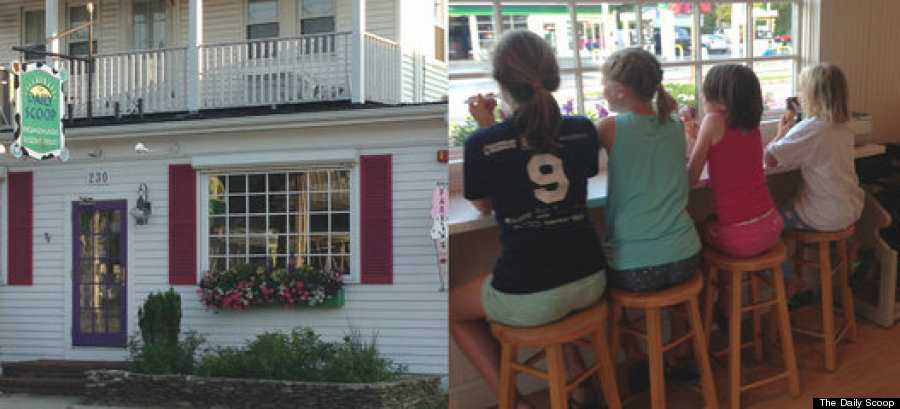
daily scoop
Deb and Bob Saunders are owners The Daily Scoop, which has two locations in Rhode Island — one in Bristol and one in Barrington. They both grew up in Barrington, which is where the original store and manufacturing facility opened.

Rich Farm Ice Cream (Connecticut)
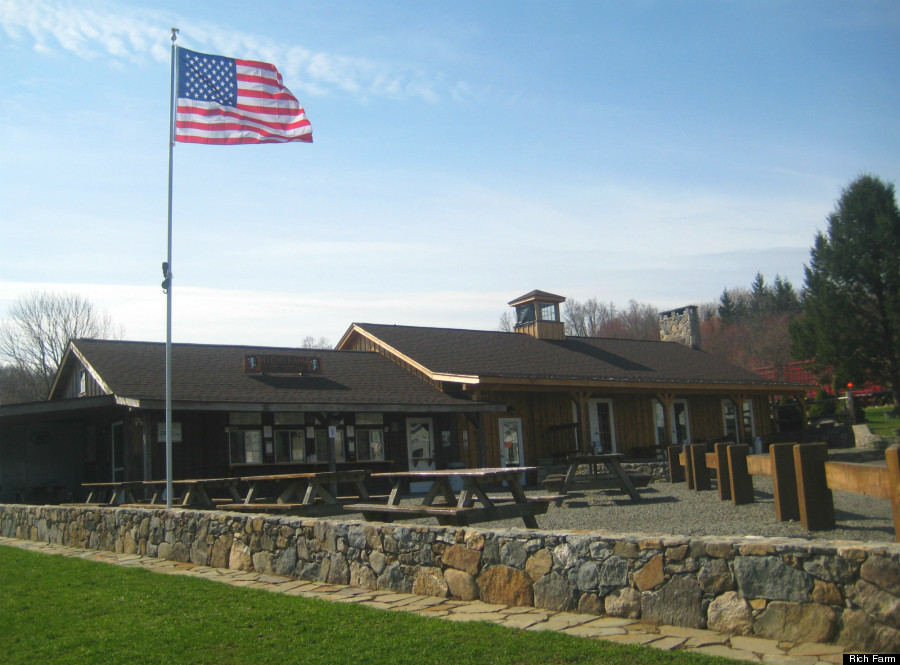
rich farm
Rich Farm, located in Oxford, CT, has been open since 1994. Dave and Dawn Rich run the ice cream shop, which is situated on Ajello’s Farm. Dave’s great great grandfather started the dairy five generations ago on Great Hill in Seymore, CT. Dave and his children opened Rich Farm Ice Cream on the dairy farm, and today the shop churns out up to 30 fresh flavors ice cream every day.

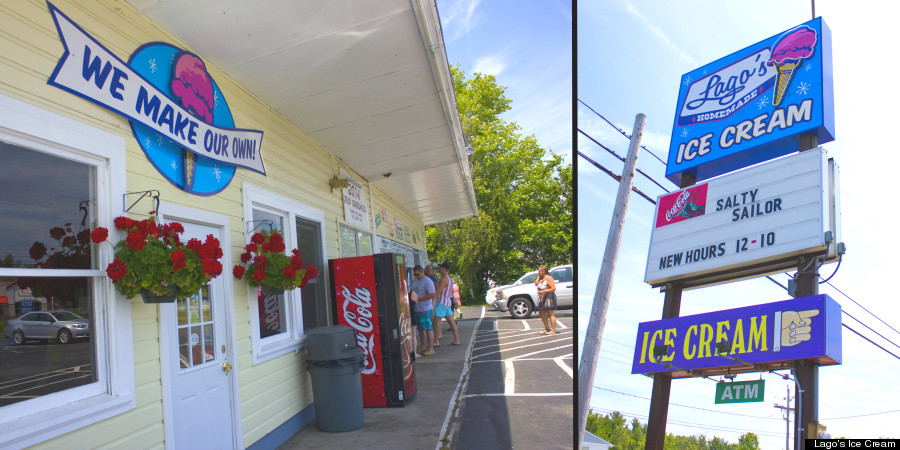
Lago’s Ice Cream (New Hampshire)
lagos
Andrea and Stephen Grenier own and run New Hampshire-based Lago’s Ice Cream. Andrea’s parents opened the store in 1981, and Andrea and Stephen’s children — Michael, 22, and Erica, 25 — also pitch in. Stephen attended Penn State Ice Cream School in 1986, but told The Huffington Post that he learned most of what he knows from his wife’s grandfather, Arnold Wade, or “Gramps.”

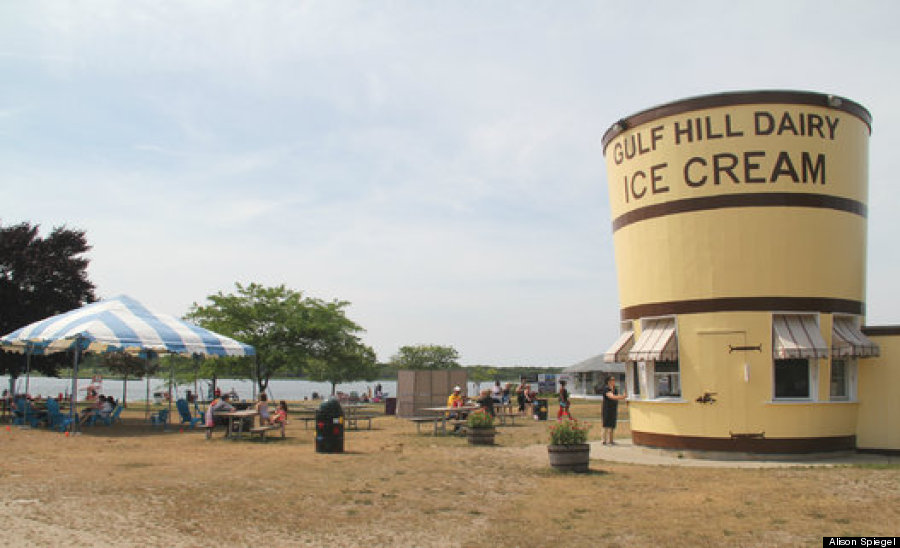
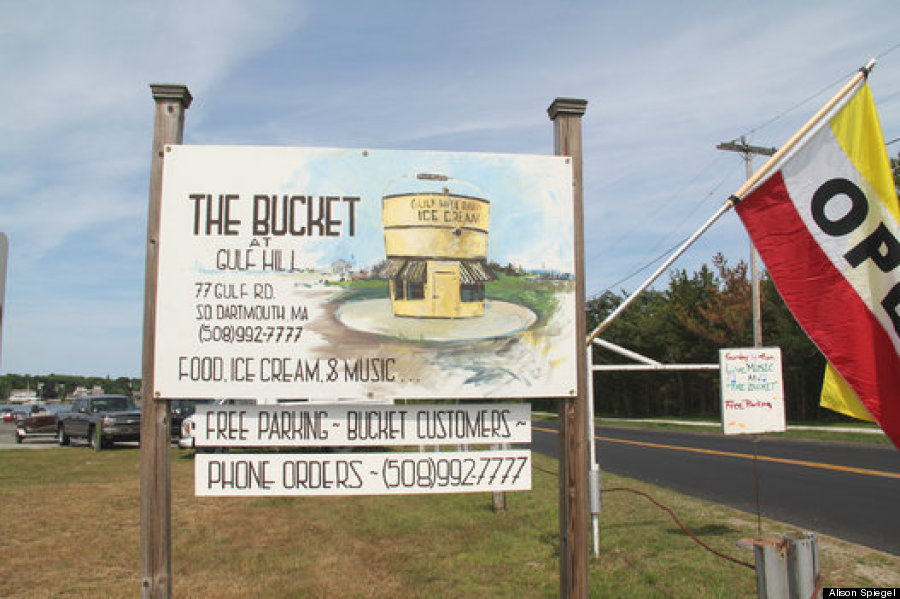
The Bucket At Gulf Hill (Massachusetts)
the bucket2
The Bucket At Gulf Hill is an ice cream stand on the shore just outside of Padanaram Village, a harbor-side town in South Dartmouth, MA. It was built in 1929 at Gulf Hill Dairy, and was moved to its current location in Apponagansett Park on Padanaram Harbor in 2003.

the bucket1
The Bucket is open seasonally and among other things, it sells ice cream, burgers and lobster rolls. In addition to the food, Bucket-goers enjoy music in the park and the beach that is just steps away.

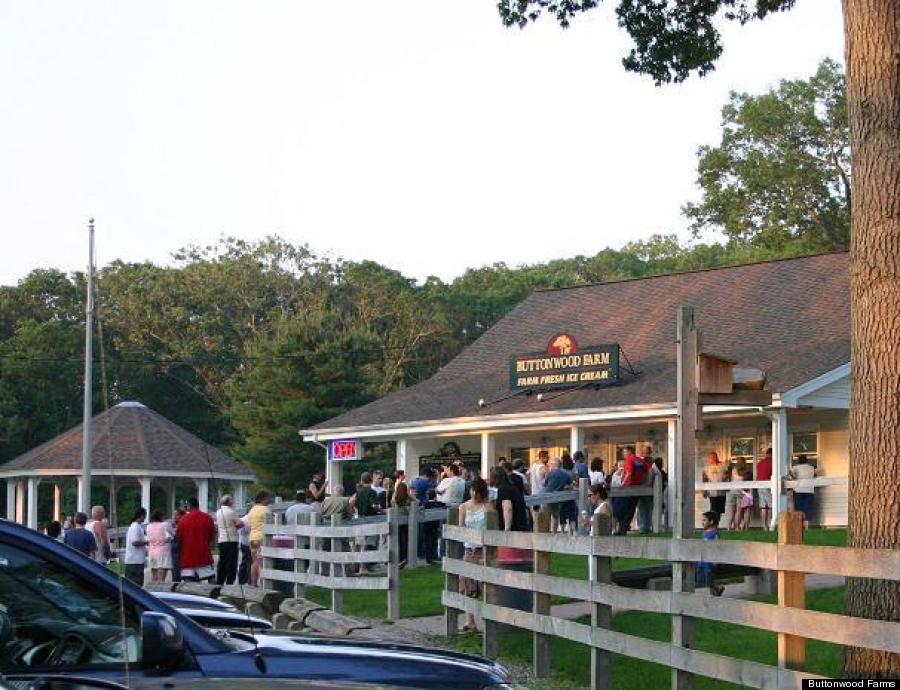
Buttonwood Farm Ice Cream (Connecticut)
buttonwood farms
Buttonwood Farm opened in 1975 as a cattle farm, merchandising cattle and feed, as well as a dairy for selling milk wholesale. In October, 1997, the family built the ice cream stand, which officially opened in May, 1998. Buttonwood Farm Ice Cream makes its own ice cream and waffle cones fresh each day.

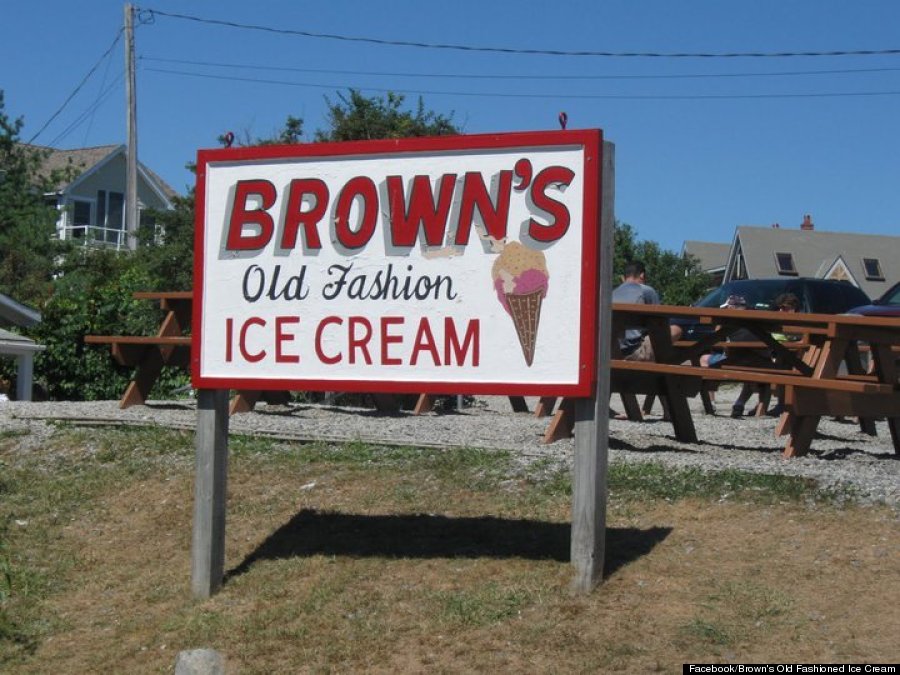
Brown’s Old Fashioned Ice Cream
browns ice cream
Brown’s Old Fashioned Ice Cream is located in York, Maine, not far from the famous Nubble Lighthouse. It’s something of an institution in the town and well-known throughout the state.

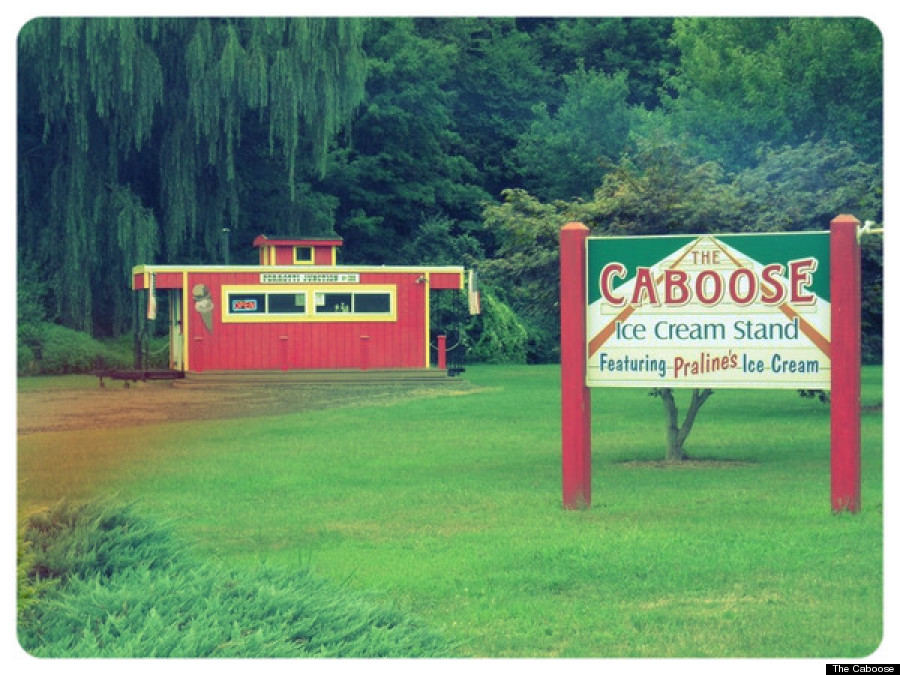
The Caboose Ice Cream Stand
the caboose
Perrotti’s Country Barn — which sells unique gifts like jewelry, home decor, candles and cards — opened in December 1999. In the spring of 2004, the Caboose Ice Cream Stand opened. It sits right next door to Perrotti’s Country Barn, on the same property. The Caboose sells more than 25 flavors of Praline’s Ice Cream, which is made locally in Wallingford, CT. Perrotti’s Country Barn and the Caboose have been completely family run since the beginning.

Which of your favorite New England ice cream stands didn’t make the list? Let us know your favorites below.

Want to read more from HuffPost Taste? Follow us on Twitter, Facebook, Pinterest and Tumblr.

No Image

12 Recipes That Sound Difficult But Are Surprisingly Easy

July 7, 2014 0

Cooking an impressive meal doesn’t have to be difficult. Sure you could take painstaking measures and spend days preparing a perfect Beef Wellington or Baked Alaska, but you can also get by doing a lot less.

Luckily, there are so many dishes out there that require very little work and experience but have a very rewarding payoff. Think risotto is out of your reach? How about chicken liver pâté or vichyssoise? Trust us — they’re easier than they sound.

Here are 12 recipes that sound difficult but are surprisingly easy to make. Let us know what your go-to easy but impressive meals are.

Want to read more from HuffPost Taste? Follow us on Twitter, Facebook, Pinterest and Tumblr.

No Image

Wine In A Can Appeals To The Rebel In All Of Us

July 7, 2014 0

Wine is often thought to be the stuffier of alcoholic beverages: Beer is for the every man, spirits are for the parties. But wine comes served with thousands of years of tradition, all bottled up behind mystifying labels and poured into fine glasses. B…

No Image

This New England Ice Cream Stand Is Proof That America’s Work Ethic Endures

July 7, 2014 0

“One day, Annalise and I were in the [scoop] shop and a customer came in and said, ‘There’s a calf running in the middle of the street!’ The two of us go running outside, I got that calf by the neck and Annalise comes up behind it… and it goes to the bathroom all over her. And then the calf swings, and it’s all over me. We had to shower and change. It was everywhere.”

Welcome to a typical day at Flayvors of Cook’s Farm, an ice cream shop in Hadley, MA. Take a few minutes talking to Debby Cook, the woman who runs the shop, and you’ll find there’s a lot more that goes on at this establishment than scooping ice cream. While your typical ice cream shop might be ubiquitous in New England — there are more of them than clover flowers in a summer field — Flayvors is nestled between 120 dairy cows and three old wooden barns on the property of Cook’s Farm, a three-generation dairy farm that’s a beloved gem in the community. But it took a lot of work to earn that reputation.

For most of us, an ice cream shop is a moment’s thought, a quick indulgence, a summer treat. But for the Cook family, it is their entire life. ”You know that saying, ‘[Man may work from sun to sun, but woman’s work is never done?] Well, it’s that way here, only it’s a farmer’s work,” says Beth Cook, who also works on the farm. “Because even on a rainy day you’ve got to fix the plow, so when the sun comes out, you can go plow. Or, you’ve got to help your wife make shelves in the store. The door knobs need mending, the locks are all jamming in, the picnic tables are breaking.”

The family operation all started with Pop — full name, Gordon Cook — who was born on Cook’s Farm. In fact, he was born in the same room he passed away in 10 years ago. “When pop was 90 we’d send him out to pick up things for the store. He’d just get in that little truck of his and just zoooooom,” Beth recounts. “I think that’s part of the reason he lived to 92,” Debby chimes in. “There’s always something to be done.”

“They say farmers don’t retire, they just get tired,” Beth adds.

Tired is an understatement. Debby ran down a list of the daily chores at the dairy farm, and just hearing her recount a day-to-day is exhausting. The morning starts with a check of the barns and cattle at 5 a.m. to ensure nothing’s amiss. Milking starts at 6 a.m. — 10 cows at a time if all goes well, and there are 120 cattle to attend to. Once the milking’s done, the barns need cleaning. There are three barns and they are not small. Then, the cows need feeding. If one of them isn’t well, they’re taken care of (the Gordons are also trained to provide the cattle with healthcare). At 3 p.m., it all begins again: Milking, cleaning and feeding. And that’s not even touching upon the fields that need plowing or the fences that need mending, or anything that goes into producing the goods of the ice cream shop.

The daily chores are grueling and messy; not just anyone can do it. Not even some of the people living on the farm itself. Beth married into the farm back in 1974 and never imagined herself milking cattle. But that’s exactly what she did for 15 years, until she was able to escape to the scoop shop. She responded to the labors of barn work the way many of us would, saying to herself, “‘I know that god didn’t put me here to do this.’ I’d have cow poop all over my face and I’d say, ‘I know I wasn’t supposed to do this. He didn’t tell me I was supposed to do this.” Clearly, working a dairy farm is not all fresh milk and ice cream cones.

cooks farm

In 1998, mother and daughter-in-law Beth and Debby opened Flayvors of Cooks Farm, the scoop shop, which not only makes a mean cookies-and-cream flavor, but that also sells raw milk straight from the dairy, if you’re smart enough to ask for it. (According to Massachusetts law, raw milk has to be kept behind the counter so that no accidental purchases are made.) The shop was started not only because both women always dreamed of having an ice cream stand on the farm — they each spent summers scooping in their teenage years — but as a way to accommodate the expenses of the growing family. When the shop opened its doors, Debby had her first child in a playpen behind the counter. When her second child took that spot, the first took post at the cash register ringing up people’s orders as she was learning to speak. When you live on a farm, you work on a farm, no matter what age you are.

The first years of any business require total devotion, especially in the service industry. Multiply that by about 120 and you’ve got a better idea of what it takes to open a shop while running a farm and starting a young family. But fatigue and hard work aren’t a deterrent. One of Flayvors’ most popular ice cream flavors, Pistachio Mint, was an accident that resulted from total exhaustion in the early years. Through her groggy eyes, Debby thought the pistachio was mint, she added chocolate chips, and a favorite flavor was born. Another time they added Oreos to the ice cream machine too soon, and what resulted was a gray mess. A tasty mess, but gray ice cream nonetheless. Not letting that deter them, they turned it around and sold it as the Great Grey Mistake.

“And then people will have requests,” says Debby, a.k.a. the ice cream fairy. “I had several requests for Grape-Nuts ice cream, so ended up making a half batch for those people.”

While Debby is the muscle and brains behind Flayvors, Beth is certainly the soul and spirit. “I just do what I do, that’s who I am. We have asparagus ice cream. We’ve got a line of people here, so I get a plate and put a bunch of spoons on it and ask, ‘Do you want to try asparagus ice cream? No? Oh, you big chicken,’” Beth recounts, laughing. “That’s pretty much the tone you feel walking into Flayvors. It’s fun-loving and playful. And that’s part of the reason folks make the journey to the farm. That and the Cookies and Cream.”

Cook’s Farm isn’t just a dairy farm and ice cream stand, it’s also an option for the residents of the community to eat and support locally. And the family makes it a point to do the same, working not only locally but with family-run businesses like theirs. They’ve found that’s where the heart resides within the industry. “The biggest person that supplies us with our ice cream items is in Massachusetts. He’s the owner, the person who runs everything, and the person who takes our orders every week. One time he met me on Route 2 halfway from Boston at 9:30 at night, because we were out of ice cream cones. It was just unbelievable,” Debby recounts.

Similarly, standing on Cook’s Farm is like being transported back to the 1950s, when families came first and personal relationships meant something. But that return to simplicity is not without consequences. The farm is small time in this day of Big Ag — it certainly feels the competition — and business isn’t guaranteed. “The worst part for me is that the future is so uncertain,” confides Debby. “It’s different from other jobs, where you’re going to get a raise. The market is dictated by so many outside factors that no matter how well you do your job, it does not matter.

“You always have the risk that we could lose it all. And you just got to keep plugging away. You just keep your head down and keep going. Hank’s favorite quote is, ‘A long, hard day sure ain’t much fun, but you’ve got to get it started if you want to get it done.’ It’s that old Aaron Tippin song. He says it all the time. He’s like, ‘If you stop and think about it, you’re going to get so overwhelmed. Just put your head down.’

“And I think that’s probably the hardest thing. Certainly as a mom you know that’s really hard. You know, my daughter’s looking at colleges and I’ve already told her she’s not going. She needs to go to community college first because we can’t afford that.”

A farmer’s future is one encompassed with risk, but they’re willing to take the gamble for the rewards the farm life sows. Beth knows how lucky she is as a grandmother to be able to live on the same property as her five grandchildren. And then there are the folks who frequent Flayvors who she’s come to know and cherish. “When I look at how old those kids are, I remember when Mary [the eldest grandchild] would punch the register. People come up to me now and say, ‘This is my daughter,’ and I think, ‘What? You have a daughter? I remember when you were a little baby.’ It’s just amazing to be a part of the community like that.”

At the end of the day, a toddler holding a stuffed dog under one arm and a cup of ice cream in the other, walks by and timidly waves after Beth greets her in her boisterous, warm-hearted voice. “Hi, hi,” Beth chirps. “One for the stuffed dog and one for you.” “You see,” says Debby, “That’s the best part. When you have a two- or three-year-old that says, ‘This is the best ice cream I’ve ever had in my life.’ Really? It hasn’t been too long [that they’ve been alive], but I sure am glad we made the list.”

Here’s a look at Cook’s Farm, courtesy of Debby Cook who also happens to be a great photographer.

No Image

Here’s Why You Need To Try Grape-Nuts Ice Cream, New England’s Best Kept Dessert

July 7, 2014 0

You know how dogs sometimes resemble their owners? Well, regional foods have similarly been known to take on the qualities of the people who gave life to them. Today we’re talking about Grape-Nuts ice cream, which if you think about it, is the result of marrying New England’s trademark austerity (Grape-Nuts) with one its most beloved foods (ice cream).

If you’ve ever even heard of Grape-Nuts ice cream, you’re already a step ahead, and chances are you’re from New England, too. If this is the first you’re hearing of it, don’t be scared — it’s not the kind of thing newcomers receive warmly. But it’ll win your heart after you give it a shot. It’s like the bad blind date you never wanted to meet, who ends up charming your pants off and becoming your husband. It’s not so much the idea of putting cereal in ice cream that scares away customers, as proven by the immense popularity of Momofuku Milk Bar’s cereal milk-flavored soft serve, but it’s more the concept of adding a perceived “health food” to one of the world’s most perfect foods that elicits winces.

But really, it can be insanely delicious. The concept takes a basic vanilla frozen custard and blends it with Grape-Nuts, which are the malt-flavored remnants of wheat-and-barley loaves that’ve been baked, dried and crushed. The pellets soften slightly in the custard, much akin to the way they do in a bowl of cereal milk, creating a balance of creamy, sweet, crunchy, salty and malty. Adding Grape-Nuts to ice cream is basically injecting whole grains, vitamins and fiber into one of America’s favorite junk foods, which is the perfect juxtaposition of everything we love.

While it’s tough to find outside of New England in the United States, the actual origins of Grape-Nuts ice cream are murky. The fact that it’s also a popular flavor in Canada and Jamaica makes it even murkier. We do know that another popular New England dessert is Grape-Nuts pudding, a simple egg custard that’s baked with Grape-Nuts for an added crunch. But in terms of which dessert came first, that remains a mystery.

To get a taste of Grape-Nuts ice cream outside of New England, your best bet is making it in your own kitchen. Here’s the recipe we use, adapted from the wonderful David Lebovitz’s brown bread ice cream recipe:

Grape-Nuts Ice Cream
Makes about 1 quart

1 cup whole milk
1 1/2 cups heavy cream
3/4 cup granulated sugar
Pinch of salt
8 ounces (1 package) cream cheese, cubed
5 large egg yolks
1/2 teaspoon vanilla extract
1 cup Grape-Nuts cereal

  1. Heat the milk, only 1/2 cup of heavy cream, sugar and salt in a saucepan until it starts to give off a little steam.
  2. In a separate, medium-sized bowl, combine the remaining 1 cup heavy cream and the cubes of cream cheese. Set a mesh strainer over the top and set the bowl in an ice bath.
  3. In yet another medium-sized bowl, whisk up the egg yolks. Gradually pour some of the warm milk mixture into the yolks, whisking constantly as you pour. Scrape the warmed yolks and milk back into the saucepan.
  4. Cook over low heat, stirring constantly and scraping the bottom with a heat-resistant spatula, until the custard thickens enough to coat the spatula. Make sure not to overcook or cook too quickly, or you’ll get scrambled eggs.
  5. When ready, strain the custard into the bowl of heavy cream and cream cheese and stir until smooth. Stir in the vanilla.
  6. Refrigerate until thoroughly chilled, at least 3-4 hours, then freeze in your ice-cream maker according to the manufacturer’s instructions. Once churned, quickly fold in the Grape-Nuts, then store the ice cream in the freezer until firm and ready to serve.

If you’re in the mood for a road trip to scout out some of the best Grape-Nuts ice cream in New England, Gifford’s locations are your best bet. The locals have also mapped out some additional suggestions online. And if you’re feeling a little lazy, try this tip from user jackattack on Chow:

“I soften some Grape-Nuts cereal in a 1:1 ratio with whole milk, let it soak for a couple of hours, and then smoosh it into some Trader Joe’s Vanilla Ice Cream. Not the real thing but it’ll do in a pinch!”

Let us know your thoughts about Grape-Nuts ice cream below!

Want to read more from HuffPost Taste? Follow us on Twitter, Facebook, Pinterest and Tumblr.