No Image

Is It A Fruit Or A Vegetable? Stop Wondering And Just Know

August 21, 2014 0

The best part about summer is easily, the abundance of summer produce. We love it. But it comes many opportunities to make yourself look like an idiot, in front of everyone.

Granted, you wouldn’t be the first person to mistakenly call an avocado a ve…

No Image

The Cake Decorating Robot Is A Vision From Our Sweetest Of Dreams

August 21, 2014 0

We here at HuffPost Taste are constantly encouraging you to make things by hand, from scratch. Pie crust, soup stock, croissants — we’ve been there, cheering you on the whole time. It tastes better, we’ve always said. And, it scores you life points.

No Image

California Drought Stings Bees And Honey Supplies

August 21, 2014 0

LOS BANOS, Calif. (AP) — California’s record drought hasn’t been sweet to honeybees, and it’s creating a sticky situation for beekeepers and honey buyers.

The state is traditionally one of the country’s largest honey producers, with abundant crops and wildflowers that provide the nectar that bees turn into honey. But the lack of rain has ravaged native plants and forced farmers to scale back crop production, leaving fewer places for honeybees to forage.

The historic drought, now in its third year, is reducing supplies of California honey, raising prices for consumers and making it harder for beekeepers to earn a living.

“Our honey crop is severely impacted by the drought, and it does impact our bottom line as a business,” said Gene Brandi, a beekeeper in Los Banos, a farming town in California’s Central Valley.

The state’s deepening drought is having widespread impacts across the state. More than 80 percent of the state is under “extreme” or “exceptional” drought, according to the U.S. Drought Monitor. Gov. Jerry Brown has declared a drought emergency, and residents now face fines of up to $500 a day for wasting water.

The drought is just the latest blow to honeybees, which pollinate about one third of U.S. agricultural crops. In recent years, bee populations worldwide have been decimated by pesticides, parasites and colony collapse disorder, a mysterious phenomenon in which worker bees suddenly disappear.

The drought is worsening a worldwide shortage of honey that has pushed prices to all-time highs. Over the past eight years, the average retail price for honey has increased 65 percent from $3.83 to $6.32 per pound, according to the National Honey Board.

Since the drought began, California’s honey crop has fallen sharply from 27.5 million pounds in 2010 to 10.9 million pounds last year, according to the U.S. Department of Agriculture. And this year’s crop is expected to be even worse.

California was the country’s leading honey producer as recently as 2003, but it has since been surpassed by North Dakota, Montana, South Dakota and Florida. In 2013, California produced less than 10 percent of the country’s $317 million honey crop.

On a recent summer morning in Los Banos, swarms of honeybees surrounded Gene Brandi and his son Mike, wearing white helmets with mesh veils, as they cracked open wooden hives and inserted packets of protein supplement to keep the insects healthy.

This year their colonies have only produced about 10 percent of the honey they make in a good year, said Brandi, who is vice president of the American Beekeeping Federation.

Besides selling honey, beekeepers earn their living from pollinating crops such as almonds, cotton, alfalfa and melons. But farmers are renting fewer hives because the lack of irrigation water has forced them to tear out orchards and leave fields unplanted.

Like many beekeepers, Brandi is feeding his bees a lot more sugar syrup than usual to compensate for the lack of nectar. The supplemental feed keeps the bees alive, but it’s expensive and doesn’t produce honey.

“Not only are you feeding as an expense, but you aren’t gaining any income.” said Brandi’s son Mike, who’s also a beekeeper. “If this would persist, you’d see higher food costs, higher pollination fees and unfortunately higher prices for the commodity of honey.”

Many California beekeepers, including Gene Brandi’s brother, are taking their hives to states such as North Dakota where they can forage in clover and buckwheat fields.

The drought is hurting businesses such as Marshall’s Farm Honey, which supplies raw honey to high-end restaurants, grocery stores and farmers markets in Northern California.

The Napa Valley business is having trouble making and buying enough honey to meet the demands of its customers. Many varieties such as honey made from sage and star-thistle aren’t available at all because it’s too dry for their flowers to produce nectar.

“They keep coming back wanting more, and it’s very painful to have to say, ‘We don’t have it,'” said Helene Marshall, who runs the business with her husband Spencer. “There’s increased demand because of increased awareness of how good it is for you, and there is less supply.”

Spencer Marshall, who maintains hives throughout the San Francisco Bay Area, said this is by far the worst year for honey production he’s seen in five decades of beekeeping. When the drought ends, “the bees may come back, but the beekeepers may not,” Marshall said.

Amelia Barad-Humphries, who owns a restaurant and floral business in Napa Valley, said she’s concerned about the drought’s impact on bees and honey supplies. She said she eats a teaspoon of local honey every day to keep her allergies in check and she relies on bees to pollinate her backyard garden.

“We need honeybees for everything,” she said. “People should be paying attention.”

No Image

Is the Future of D.C. Restaurants in Collaborations?

August 21, 2014 0

Mandu could have been mistaken for a hot nightclub with a line of people camped out down the block at 10 p.m. on a recent Friday night. But instead of a bouncer, a host ushered in the crowds. Within 10 minutes, every seat in the Korean restaurant was full, with people two or three deep […]

No Image

Hazelnut Shortage Will Probably Hit You Right In The Nutella

August 20, 2014 0

One of the world’s most desired natural resources is facing a major shortage. It’s not oil, it’s hazelnuts. Harvests have been severely damaged this year by unseasonable weather and disease, so if you see long lines at your local grocery store, it might be people trying to get their hands on the last jars of Nutella before prices surge.

Turkey produces over 70 percent of the world’s hazelnuts, but has been plagued by hailstorms and frosts, pushing the price of hazelnuts up to the highest it’s been in 10 years. With Ferrero, Nutella’s parent company, using 25 percent of the world’s hazelnut supplies and putting over 50 hazelnuts in each jar, don’t be surprised if the shortage requires you to dish out a bit more for that chocolaty, gooey goodness. (But perhaps this is a blessing in disguise for those of you who take your Nutella addiction too far.)

“Inclement weather last spring in Turkey has impacted this year’s hazelnut harvest,” a Ferrero USA spokesperson confirmed in an email to The Huffington Post. “We are tracking this issue closely and there’s no foreseeable impact on the availability of Nutella.”

To keep the stream of chocolate, hazelnuts and deliciousness flowing straight into your mouth, Ferrero has shored up its supply of hazelnuts by purchasing the Turkish hazelnut supplier, the Oltan Group. A press release from Ferrero calls the Oltan Group “the worldwide leading operator in the procurement, processing and marketing of hazelnuts.”

Nutella isn’t healthy, but that hasn’t stopped it from becoming one of the most popular chocolate products in the United States. Nutella now accounts for over 70 percent of the sales of chocolate spreads in the U.S., with sales up 5.9 percent in 2013. Across the world last year, Nutella sold $2.46 billion worth of the spread.

Ferrero is also attempting to mitigate the environmental cost of Nutella by ensuring the palm oil they use is responsibly harvested. The company is seeking to use palm oil that does not hurt endangered species or contribute to deforestation, and claims that currently, 90 percent of its palm oil is traceable to responsible plantations.

Before you go scrambling to find a cheaper spread for your morning toast, let’s count the ways we love Nutella. Oh Nutella, we wish we knew how to quit you.

No Image

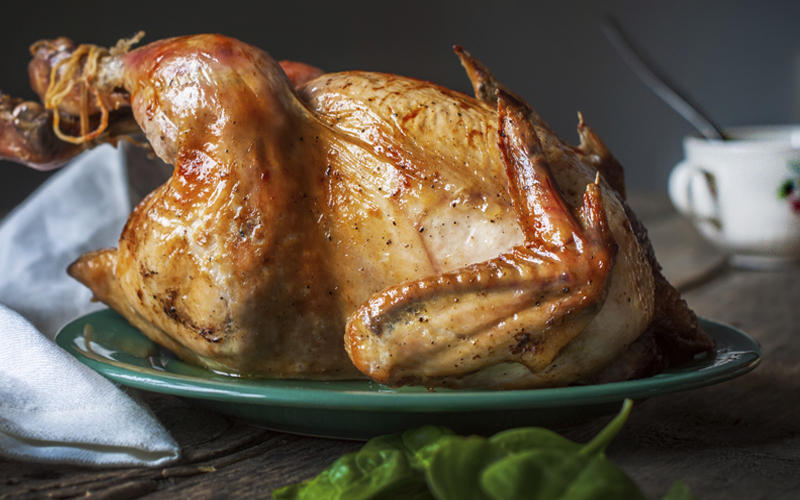
Best of Maria’s Kitchen: Crispy Roast Chicken and Gravy

August 20, 2014 0

crispychickenandgravy

In honor of Maria’s Farm Country Kitchen turning 6, I’ve decided to revisit a few fan-favorite recipes. On Monday, I reposted the number one most popular recipe on my blog: Mashed Potatoes from Scratch.

But you can’t just eat mashed potatoes (well, you can, but they’re better as a side). So here’s one of my favorite dishes to serve with my mashed potatoes: Crispy Roast Chicken and Gravy.

This is one of the meals I regularly make for my family. The truth is, not only is it a family favorite because it’s absolutely delicious, but also because it’s so easy.

Honestly, I can’t understand two things: 1) why anyone would want to eat a piece of chicken that doesn’t have crispy skin surrounding it and 2) why anyone would make it seem so hard. Roast Chicken with Crispy Skin is one of the simplest, easiest things that can ever be made. You only really need three things: an oven, a whole organic chicken with skin, and a roasting pan that can go from oven to stovetop (for the gravy!). I have a stainless steel roasting pan, but you can also use a cast-iron pan. You’ll also need a bit of flour, water, and salt for the gravy. But that’s it! Nothing more. No fussing!

Chicken with Crispy Skin

Ingredients:

  • 1 organic chicken

Directions:

  1. Heat oven to 375 degrees.
  2. Place chicken in the roasting pan breast-side up (don’t laugh, someone in my house did put the chicken breast-side down once, and it was a serious error in crispy skin-ness!).
  3. Bake for about an hour or two, depending on the size of the chicken. DO NOT BASTE!
  4. How can you tell if it’s done? Well, the leg will be a little jiggly and easy to pull on, the juices will run clear if it happens to be stabbed with a fork, and the skin looks good and crispy!

And now for the gravy…

Gravy

Ingredients:

  • ¼ cup flour
  • ¾ cup water
  • Salt and pepper to taste

Directions:

  1. Remove chicken from pan and place on a serving dish (make sure to tilt the chicken as you move it so all the juices from inside pour out into the pan).
  2. Place pan on stovetop and turn the burner heat to high.
  3. Mix together flour and water and stir until smooth. Then add mixture to the drippings.
  4. Scrape the pan and stir until gravy is thick, about a minute.
  5. Season with salt and pepper to taste.

Two Tips:

  1. After you’re done eating the chicken, the carcass makes a great chicken broth base. Just put the carcass in a saucepan, cover it with water, add salt, and boil for an hour or two; then strain. You now have homemade broth–which tastes better than anything store-bought–and you’ve gotten it for “free.”
  2. My favorite leftovers? Take a good crusty piece of whole wheat bread and toast it. Then microwave some of the leftover chicken pieces and gravy and pour over the toast. DEVOUR.

For more from Maria Rodale, visit www.mariasfarmcountrykitchen.com