No Image

A Not-So-Subtle Meditation on Sugar

July 12, 2014 0

As people streamed out of the Kara Walker installation “A Subtlety” on a recent Sunday afternoon to buy an ice cream cone from one of the trucks idling outside the old Domino Sugar Factory on the Williamsburg waterfront, I wondered how many thought abo…

No Image

Crumbs Cupcakes Could Be Saved By Reality TV Host

July 12, 2014 0

Fear not, cupcake fans: Crumbs Bake Shop could live to see another day.

Marcus Lemonis, the owner of Dippin’ Dots and host of CNBC reality show “The Profit,” is stepping in to invest in the recently closed cupcake chain, according to a press release p…

No Image

Drivers Horrified To Find Highway Covered In Rotting Meat

July 12, 2014 0

QUEENSBURY, N.Y. (AP) — Some car owners are raising a stink after driving a road littered with meat in upstate New York.

Dozens of chunks of meat were on the road in front of a mall Thursday in Queensbury, The Post-Star (http://bit.ly/TZFYWZ) of Glens Falls said Saturday in reporting on the meat mystery in the town about 60 miles north of Albany.

Police believe meat fell off a truck that might have been heading from a farm or slaughterhouse to a rendering plant, but no one has come forward to claim it.

The state Department of Transportation cleaned the meat up, but driver James Teele and other motorists were still dealing with the aftermath Friday.

Teele said he immediately took his SUV to a car wash after driving through the mess en route home Thursday, “but it was too late.” He told the Post-Star: “My vehicle still smells like rotting meat” and flies are swarming around it.

He said he believes the offending material was chicken fat.

Local car washes were busy with motorists trying to obliterate the meat smell. As many as 35 drivers flocked to Hoffman Car Wash, which started asking them to hose off their cars in a self-service area before going through the automatic wash, manager Matt Phillips said.

Still, the stench was tough to take.

“My guys had to step out for a while, it was so bad,” Phillips said.

Drivers were still coming in Friday trying to rout the odor.

“After a while, it will decay,” Phillips said. “But until then, when you turn the air (conditioning) on or air comes through the vents, watch out.”

___

Information from: The Post-Star, http://www.poststar.com

No Image

Organic Food Has More Antioxidants, Less Pesticide Residue: Study

July 12, 2014 0

Organic food really is better for your health than its conventional counterparts. At least, that’s the conclusion of a new study conducted by researchers at Newcastle University and published this week. But not everyone is convinced.

Specifically, the researchers said that organic fruits, vegetables and cereals contain significantly higher concentrations of antioxidants than conventionally grown crops. They added that organic produce and cereals were found to have lower levels of toxic metals and pesticides.

For the study — said to be the largest of its kind — the researchers analyzed more than 340 international, peer-reviewed studies that looked at compositional differences between organic and conventional crops.

According to the paper, researchers found that organically grown produce and cereals have between 19 and 69 percent higher concentrations of certain antioxidant compounds than conventionally grown crops.

“Many of these [antioxidant] compounds have previously been linked to a reduced risk of chronic diseases, including [cardiovascular] and neurodegenerative diseases and certain cancers, in dietary intervention and epidemiological studies,” the paper reads.

The researchers added that pesticide residues were four times more likely to be found in conventional crops than organic ones. Organic produce and cereals were also found to have significantly lower concentrations of cadmium, a toxic heavy metal.

“This study demonstrates that choosing food produced according to organic standards can lead to increased intake of nutritionally desirable antioxidants and reduced exposure to toxic heavy metals,” lead study author Carlo Leifert said, per a news release. “This constitutes an important addition to the information currently available to consumers which until now has been confusing and in many cases is conflicting.”

The question of whether or not organic food is really better nutritionally has plagued health-conscious foodies for years; but despite Leifert’s confidence, it doesn’t seem that his new study will put this debate to rest.

When it comes to antioxidants, for example, the jury is still out as to whether the compounds really have a substantial impact on health. In addition, as The Guardian notes, “the higher levels of cadmium and pesticides in the conventional produce [referenced in the study] were still well below regulatory limits.”

The BBC also pointed out that levels of proteins and amino acids “were lower in the organic crops sampled” in the study.

“You are not going to be better nourished if you eat organic food,” Tom Sanders, a professor of nutrition at King’s College London, told The Guardian this week. “What is most important is what you eat, not whether it’s organic or conventional. It’s whether you eat fruit and vegetables at all. People are buying into a lifestyle system. They get an assurance it is not being grown with chemicals and is not grown by big business.”

A number of earlier studies that have looked at the differences between organic and conventional crops seem to support Sanders’ comments.

In 2012, for instance, a large study conducted by Stanford researchers found that organic foods are, on average, “no more nutritious” than conventional ones, per The New York Times. A 2009 study published in the American Journal of Clinical Nutrition similarly concluded that there’s “no evidence of a difference in nutrient quality between organically and conventionally produced foodstuffs.”

But there are also studies that seem to support the idea that organic crops are indeed better for health. A 2010 study by Washington State University researchers found evidence that organic strawberries contained more vitamin C than conventional ones.

In addition, there is some scientific evidence to support the idea that consuming pesticides could be harmful to health.

Ultimately, it seems that more research still needs to be conducted to determine conclusively whether or not organic produce is really better for health.

Leifert himself acknowledges that his team’s study should only be used as a “starting point” and that more research needs to be done into the possible health benefits of organic food.

“We have shown without doubt there are composition differences between organic and conventional crops, now there is an urgent need to carry out well-controlled human dietary intervention and cohort studies specifically designed to identify and quantify the health impacts of switching to organic food,” he said, per a press release.

Leifert’s study, which was peer-reviewed, was published Friday in the British Journal of Nutrition. Read it here.

No Image

7 Things You Probably Didn’t Know About Blueberries

July 12, 2014 0

It’s a classic in summery fruit salads (not to mention one of our favorite year-round yogurt and oatmeal toppers), well known for its antioxidant prowess and low calorie count. But some of the blueberry’s health benefits and fun facts aren’t exactly common knowledge. Here are a few things to know about what just might be one of the most popular superfoods around.

1. Blueberries protect against memory loss.
A 2012 study suggested that eating at least one serving of blueberries a week slowed cognitive decline by several years. One possible explanation as to why came from a 2013 study in mice, which found that berries might protect the brain by clearing toxic proteins that accumulate there.

2. Maine produces more blueberries than anywhere else in the world.
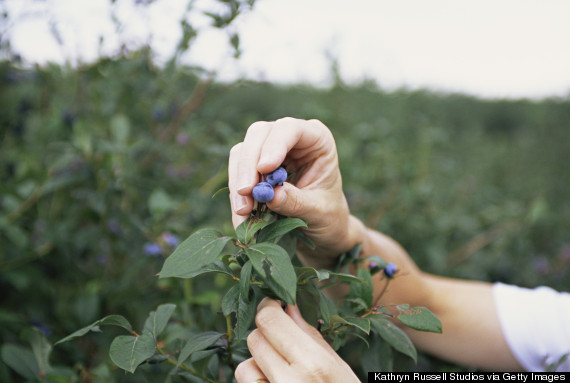
blueberry bush
At least, according to the University of Maine.

3. They can be used as a natural food dye.
And legend has it that early American colonists boiled them with milk to make gray paint, according to the Produce for Better Health Foundation’s Fruits & Veggies More Matters campaign.

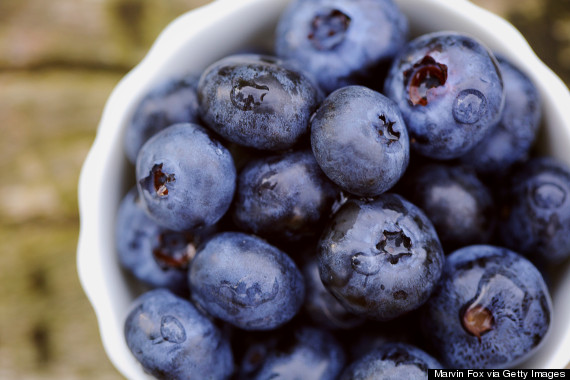
4. The perfect blueberry should be “dusty” in color.
blueberries dusty

5. But don’t wash off that “dust” until you’re ready to dig in.
A rinse softens your blueberries, which can quicken spoiling, according to the University of Texas MD Anderson Cancer Center.

6. The blueberry bush is a relative of the rhododendron — and the azalea.
rhododendron
And along more intuitive lines, also the cranberry.

7. Many blueberry-flavored processed foods do not contain any real blueberries.
Products like bagels, cereals, breads and muffins from brands like Kellogg’s, Betty Crocker and General Mills were reported to use combos of sugar, corn syrup, starch, oil and artificial flavors and dyes to create their own mock blueberries, according to a 2011 Consumer Wellness Center investigation, the LA Times reported.

No Image

5 Surprisingly Delicious Uses For Coconut Oil

July 12, 2014 0

This healthy fat can transform popcorn, garlic bread and even fried chicken, as these creative recipes from Sasha Seymour’s new book Coconut Every Day show.

By Lynn Andriani

Like Us On Facebook |
Follow Us On Twitter