No Image

Laurie David Dishes on Family Dinner

June 30, 2014 0

Recently, I had the pleasure of sitting down for a quick interview with activist, author, and producer Laurie David to discuss her new documentary film Fed Up, which looks into our problematic sugar consumption. We also dove into her book The Family Cooks, and the importance of family dinners.

Enjoy!

To help families initiate their own dinner routines, Laurie and her Family Cooks coauthor Kirsten Uhrenholdt have launched a new campaign called Home-Cooked Sundays. Here’s an excerpt from their book on how to get started:

Inaugurating this ritual will radically simplify your cooking routine during the busy work or school week and guarantee you healthier, calmer, and happier meals. A Home-Cooked Sunday is your family’s day to shop, prep, cook, and enjoy a great sit-down dinner together-all the while getting your fridge ready for the week.

To get started, sit down in a comfortable chair with an inspirational cookbook (!) or a box of recipes and write out a plan for three dinners: one for tonight–maybe it’s just a simple soup made from all the leftover veggies in the fridge–and two easy dinners for midweek. Then write a shopping list for the recipes and the staples you will need for the whole week. Take the kids along!

Once you get home from shopping, put on comfortable shoes and your favorite music. Have your kids pitch in by giving them a task they can learn by heart (for the little ones, something like pulling broccoli apart and mixing the salad dressing-or, for the older ones, making a batch of tomato sauce). Invite good friends to take part. Pour yourself a glass of wine or a cup of tea and cook up a delicious start to your week.

Every Sunday…

Prep a few of these recipe staples so you’ll always have them on hand when needed:

• Peel three or four onions and one or two heads of garlic (don’t chop them yet–they’ll get funky) and store in airtight containers.

• Wash, peel, and slice plenty of carrots, celery, and peppers. Chop up a head or two of cabbage, cauliflower, or broccoli. Store them in separate glass jars or containers (adding water to the carrots) and place in the fridge–they’ll be easy to grab for snacks or to chop up for soups and salads.

• Wash and prep a large container of salad greens. Refrigerate in an airtight container.

• If you are a kale-loving family, wash, chop, and knead a couple of bunches so they are ready for salads, as toppings for soups, eggs, and beans, or as fillings for sandwiches and wraps. Refrigerate in an airtight container. (Use 1 teaspoon olive oil per bunch of kale; drizzle kale with olive oil and using both hands, knead the kale as you would dough until it is silky and tender, about 30 kneads. Use right away or store covered for up to four days in the fridge.)

• Mix a jar of your favorite salad dressing.

On the Sundays when you have a little more time…

• Simmer a pot of grains or beans.

• Make a big pot of soup or white bean chili.

• Toss a quinoa or chopped salad to last a few days.

• Simmer a batch of tomato sauce for the fridge and freezer.

• Roast up a bunch of vegetables–such as cauliflower, Brussels sprouts, and sweet potatoes–so you have a week’s head start on side dishes, fillings for sandwiches, salads, and soups.

Join The Family Cooks challenge and make every Sunday a Home-Cooked Sunday!

For more from Maria Rodale, visit www.mariasfarmcountrykitchen.com
No Image

The 10 Commandments of Grocery Shopping

June 30, 2014 0

Given the fact that the employees at my local grocery store see me more than my own family does, it’s safe to say that I have quite a bit of experience pushing a full cart around.

While I generally enjoy the experience because a) I love finding and ch…

No Image

The One Trick That Cuts Your Cooking Time In Half

June 30, 2014 0

It turns out you can cook that frozen seafood right now. Plus, four more clever ways to get dinner on the table faster.

By Lynn Andriani

Don’t Defrost the Fish

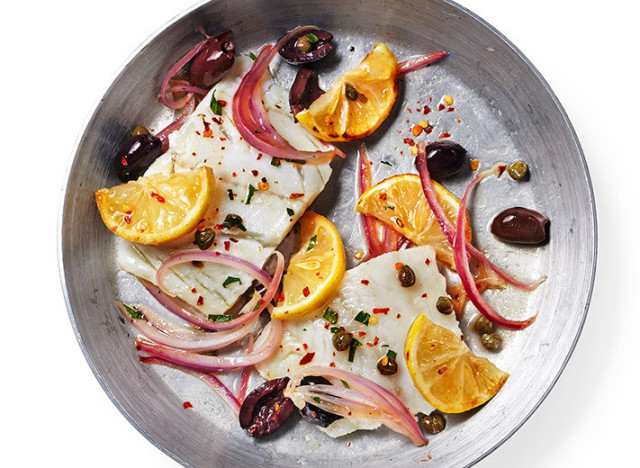
cod with lemon recipe

Waiting for frozen seafood to thaw can be a drag—which is why chef Jesse Cool of the Flea Street café in Menlo Park, California, skips that step. She sautés, broils and roasts fillets directly from frozen, just adding a few minutes to the usual cooking time. As the fish thaws, its juices infuse the pan sauce.

Get the recipe: Cod with Lemon, Olives and Capers

Toss Tacos Like Salad

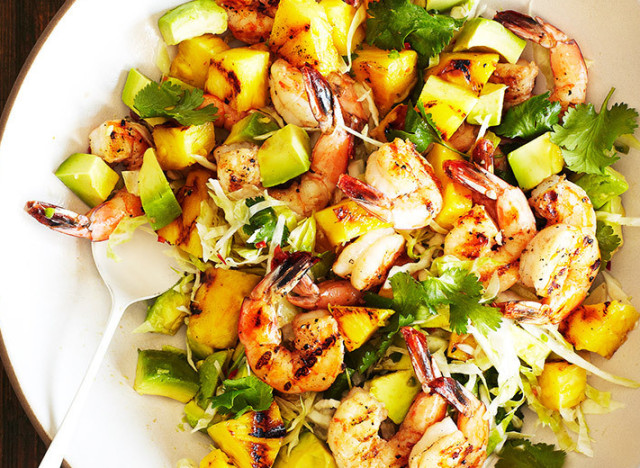
shrimp taco salad recipe

DIY tacos are great. Filling 14 bowls of fixings and arranging them on the table, not so much. This throw-everything-in-a-bowl version is a major time-saver; think of it as moo shu pork, but Mexican. You mix all the taco fillings together on the table, place them on a serving platter and let everyone fill their own tortilla.

Get the recipe: Shrimp Tacos

Let Hot Water Do All the Work

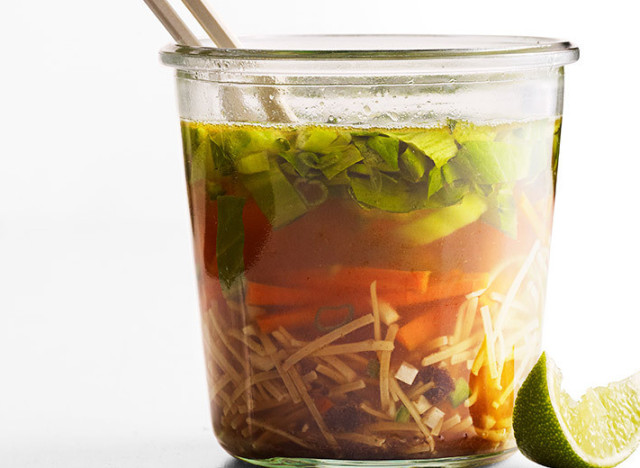
noodle bowl recipe

A rich-tasting bowl of homemade noodle soup with vegetables is a dependable and healthy meal, but it isn’t usually the speediest dinner, which is why we were thrilled to learn this shortcut: All you need to do is place thin egg noodles, powdered vegetable bouillon, a pinch of sugar and some shredded or chopped carrot, scallion, bok choy, garlic and chili into a container. Pour boiling water over everything and let stand 10 to 15 minutes. The noodles and vegetables will become soft and tender, and the water will turn into a delicious savory broth.

Get the recipe: Noodle Bowl

Freeze Beef for Just a Moment

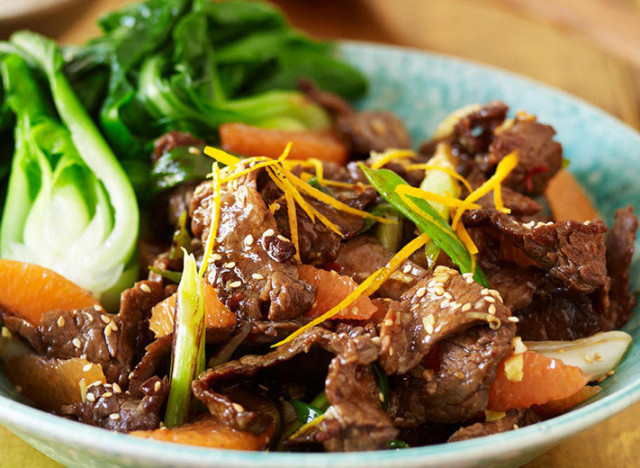
beef stir fry recipe

Whether you’re making fajitas, a stir-fry or some other dish that involves thin slices of beef, cutting the meat into a uniform size can be frustratingly time-consuming. The trick to getting the job done in a flash is to partially freeze the uncooked steak first. Place it in the freezer for 20 minutes, while preparing the rest of the ingredients; when you take it out, you should have no trouble slicing the beef into perfect, quick-cooking bite-size pieces.

Get the recipe: Stir-Fried Orange Beef with Sesame Seeds

Don’t Just Preheat the Oven

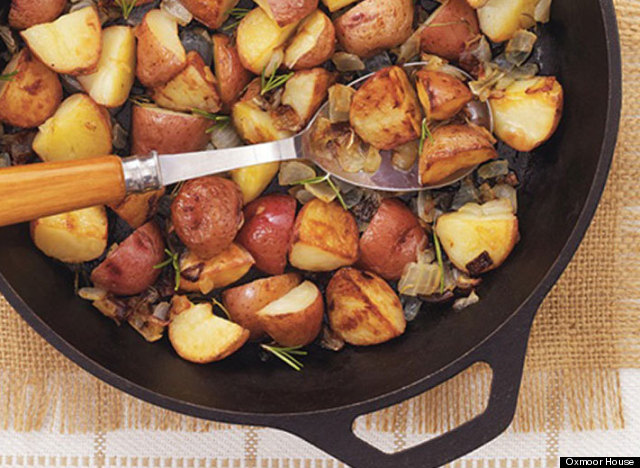
cast iron potatoes recipe

The recent popularity of cast-iron skillets makes sense for so many reasons: The pans are a great value, incredibly durable and, as time-pressed cooks know, excellent conductors of heat. But a cast-iron skillet can be even handier if you stick it in the oven to preheat while the oven warms up. It doesn’t matter if you’re cooking chicken or potatoes; adding the ingredient to an already-hot pan will not only shave your overall cooking time but will also give the food a nice browned edge.

Get the recipe: Cast Iron-Roasted Potatoes with Rosemary and Onion

Like Us On Facebook |
Follow Us On Twitter

No Image

Dolcezza Brings Sundaes and To-Go Window to Logan Circle

June 30, 2014 0

Gone are all signs of the roach- and rodent-plagued Mid City Deli. The prime corner on 14th and P streets NW has been completely transformed as the sixth gelateria and cafe from Dolcezza. New to this location is a to-go window on 14th Street, where customers will be able to order from the sidewalk. The Logan Circle […]

No Image

12 Cute, Kid-Friendly Dishes That Are Actually Easy

June 30, 2014 0

When it comes to getting kids excited about food that doesn’t involve shiny wrappers or fish-shaped crackers, I say bring on the cute. With four kids, ages 5 and under, I have only one rule in the kitchen: All ideas must be doable. (Do you hear me, Pin…

No Image

What’s <em>Really</em> In Those Energy Gels And Chews For Athletes

June 30, 2014 0

Evaporated cane juice, fructose, sea salt, tapioca syrup, unsweetened chocolate, invert sugar syrup, cocoa powder, sucrose, confectioner’s glaze.

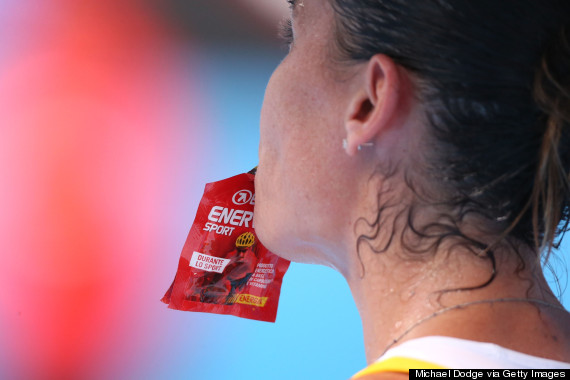
The ingredients in some of the most popular energy gels and chews for endurance athletes may seem surprisingly familiar (and perhaps not in a good way): They’re awfully similar to candy, with perhaps the occasional electrolyte or amino acid thrown in. But believe it or not, there’s a reason for the marked similarities, and it’s not necessarily a bad one.

Why gummy candy and a marathoner’s fuel share so many common ingredients boils down to what happens in the gut when you eat these types of products. Sugar, in its various forms, is an easily digestible source of the carbohydrates the brain and body need to sustain physical activity. Before these types of products were available, long-distance runners and cyclists really did take candy along for the ride, explains Liz Applegate, Ph.D., director of sports nutrition at the University of California, Davis.

When you exercise, “you’re using up your stores of glycogen, your body’s stores of carbohydrates,” Applegate tells HuffPost. The body replenishes these stores with glucose, some of which is naturally floating around in your bloodstream, but more of which you need to ingest in “whatever simple form of sugary carbohydrates will keep you feeling good,” she says.

energy gel

But that is by no means permission to fuel every three-mile jog with a Snickers bar. Athletes typically don’t need to refuel during exercise that lasts less than an hour, says Susan M. Kleiner, Ph.D., RD, of High Performance Nutrition, LLC. (Water will work just fine for those activities, she notes.) The American College of Sports Medicine and the National Academy of Sports Medicine recommend getting 30 to 60 grams of carbohydrates per hour of physical activity. And that even includes weightlifting, as long as it’s high-intensity, since “the higher the intensity, the more carbohydrate you’re burning,” she says.

Athletes competing in even longer events — say, something lasting three to five hours, or more — can benefit from 60 to 90 grams of carbohydrates per hour of activity, says Applegate.

Aside from their simple carbohydrates, chews and gels are also convenient to transport for athletes who, understandably, don’t want to carry around extra bulk while competing. These products also aim to taste good: Manufacturers put effort into concocting the perfect “mouthfeel”, says Kleiner, who is involved in developing a new sports nutrition product for women. Most product lines on the market boast six to 10 flavor varieties, from citrus and berry to chocolate and peanut butter.

“Some of the strategy [for manufacturers] is that the athlete is looking for a reward,” Kleiner says. “These things play a role in helping you get the mental motivation to keep going.” Sports drinks don’t always have the same effect, she says, as many of the athletes she’s worked with express a desire to chew their sustenance.

Not that race day is the time to first bite into an endurance-boosting morsel. “People have to experiment with it,” says Applegate. “They need to be training with it.” At first, athletes may experience some stomach upset as they get used to eating while exercising, but the gut’s response — just like that of the heart, lungs and muscles — is trainable, she says.

Thinking about trying out gels or chews? Keep in mind that you probably won’t even need them until your training plan calls for workouts lasting around 75 minutes, says Pamela Nisevich Bede, MS, RD, CSSD, LD, of SwimBikeRunEat.com. And don’t be afraid to go through some trial and error with different products until you find a brand you feel good with. Then experiment with different flavors within that brand, she suggests. If you’re training for an upcoming race, investigate what kinds of fuel the race will offer along the course, and see how your body responds to that during training. “On race day, if you can stomach that, you don’t have to carry as much with you,” she says.

So what should you look for in an endurance product? First things first: “It’s best to pick a product that shows multiple sources of carbohydrates,” says Applegate. “You’re able to uptake a bit more carbohydrate per minute and that really makes a difference in longer events.” On labels, that might look like the starch maltodextrin and fructose, or evaporated cane juice and fruit juice, or honey and tapioca syrup.

The problem, however, is that manufacturers don’t always have research to back up their products’ claims, Kleiner says. They may borrow science on just one of the ingredients and promote that ingredient’s benefits as perks of the product as a whole, when in a particular combination, that ingredient may not work the same. “To think about how much real science is behind a lot of these products … there’s often not,” she says.

Many also have incredibly long ingredients lists that contain more than just simple carbs and electrolyte-replacing salt, making it hard to decipher what it really is you’re eating. We looked at the ingredients lists of a handful of the most popular endurance products and asked the experts to put some of the most confusing contents into categories we can understand.

(Click to enlarge)

While typically here at Healthy Living we’d advise avoiding processed foods with more than five ingredients, the experts say ingredients lists in this scenario should not be a source of stress.

For one thing, some of the ingredients you might typically shy away from do still offer some benefits. Potassium sorbate, for example, is is a preservative. But it’s also a source of potassium, an electrolyte lost through sweat during exercise. Not to mention, “you do want to prevent the product from breaking down on the shelf or while you’re jogging,” says Bede.

For those who would still prefer something less processed, honey can do the trick, as can dried, or even fresh, fruit, says Applegate. (Though these may be a bit more challenging to transport, and fruit can be tougher on the intestinal tract.) “Definitely work on getting [processed] foods out of your diet the rest of the days of the week,” Bede says, “but when it comes to fueling when you’re 20 miles from home, I say go with what’s easy and convenient.”