No Image

Drivers Horrified To Find Highway Covered In Rotting Meat

July 12, 2014 0

QUEENSBURY, N.Y. (AP) — Some car owners are raising a stink after driving a road littered with meat in upstate New York.

Dozens of chunks of meat were on the road in front of a mall Thursday in Queensbury, The Post-Star (http://bit.ly/TZFYWZ) of Glens Falls said Saturday in reporting on the meat mystery in the town about 60 miles north of Albany.

Police believe meat fell off a truck that might have been heading from a farm or slaughterhouse to a rendering plant, but no one has come forward to claim it.

The state Department of Transportation cleaned the meat up, but driver James Teele and other motorists were still dealing with the aftermath Friday.

Teele said he immediately took his SUV to a car wash after driving through the mess en route home Thursday, “but it was too late.” He told the Post-Star: “My vehicle still smells like rotting meat” and flies are swarming around it.

He said he believes the offending material was chicken fat.

Local car washes were busy with motorists trying to obliterate the meat smell. As many as 35 drivers flocked to Hoffman Car Wash, which started asking them to hose off their cars in a self-service area before going through the automatic wash, manager Matt Phillips said.

Still, the stench was tough to take.

“My guys had to step out for a while, it was so bad,” Phillips said.

Drivers were still coming in Friday trying to rout the odor.

“After a while, it will decay,” Phillips said. “But until then, when you turn the air (conditioning) on or air comes through the vents, watch out.”

___

Information from: The Post-Star, http://www.poststar.com

No Image

Organic Food Has More Antioxidants, Less Pesticide Residue: Study

July 12, 2014 0

Organic food really is better for your health than its conventional counterparts. At least, that’s the conclusion of a new study conducted by researchers at Newcastle University and published this week. But not everyone is convinced.

Specifically, the researchers said that organic fruits, vegetables and cereals contain significantly higher concentrations of antioxidants than conventionally grown crops. They added that organic produce and cereals were found to have lower levels of toxic metals and pesticides.

For the study — said to be the largest of its kind — the researchers analyzed more than 340 international, peer-reviewed studies that looked at compositional differences between organic and conventional crops.

According to the paper, researchers found that organically grown produce and cereals have between 19 and 69 percent higher concentrations of certain antioxidant compounds than conventionally grown crops.

“Many of these [antioxidant] compounds have previously been linked to a reduced risk of chronic diseases, including [cardiovascular] and neurodegenerative diseases and certain cancers, in dietary intervention and epidemiological studies,” the paper reads.

The researchers added that pesticide residues were four times more likely to be found in conventional crops than organic ones. Organic produce and cereals were also found to have significantly lower concentrations of cadmium, a toxic heavy metal.

“This study demonstrates that choosing food produced according to organic standards can lead to increased intake of nutritionally desirable antioxidants and reduced exposure to toxic heavy metals,” lead study author Carlo Leifert said, per a news release. “This constitutes an important addition to the information currently available to consumers which until now has been confusing and in many cases is conflicting.”

The question of whether or not organic food is really better nutritionally has plagued health-conscious foodies for years; but despite Leifert’s confidence, it doesn’t seem that his new study will put this debate to rest.

When it comes to antioxidants, for example, the jury is still out as to whether the compounds really have a substantial impact on health. In addition, as The Guardian notes, “the higher levels of cadmium and pesticides in the conventional produce [referenced in the study] were still well below regulatory limits.”

The BBC also pointed out that levels of proteins and amino acids “were lower in the organic crops sampled” in the study.

“You are not going to be better nourished if you eat organic food,” Tom Sanders, a professor of nutrition at King’s College London, told The Guardian this week. “What is most important is what you eat, not whether it’s organic or conventional. It’s whether you eat fruit and vegetables at all. People are buying into a lifestyle system. They get an assurance it is not being grown with chemicals and is not grown by big business.”

A number of earlier studies that have looked at the differences between organic and conventional crops seem to support Sanders’ comments.

In 2012, for instance, a large study conducted by Stanford researchers found that organic foods are, on average, “no more nutritious” than conventional ones, per The New York Times. A 2009 study published in the American Journal of Clinical Nutrition similarly concluded that there’s “no evidence of a difference in nutrient quality between organically and conventionally produced foodstuffs.”

But there are also studies that seem to support the idea that organic crops are indeed better for health. A 2010 study by Washington State University researchers found evidence that organic strawberries contained more vitamin C than conventional ones.

In addition, there is some scientific evidence to support the idea that consuming pesticides could be harmful to health.

Ultimately, it seems that more research still needs to be conducted to determine conclusively whether or not organic produce is really better for health.

Leifert himself acknowledges that his team’s study should only be used as a “starting point” and that more research needs to be done into the possible health benefits of organic food.

“We have shown without doubt there are composition differences between organic and conventional crops, now there is an urgent need to carry out well-controlled human dietary intervention and cohort studies specifically designed to identify and quantify the health impacts of switching to organic food,” he said, per a press release.

Leifert’s study, which was peer-reviewed, was published Friday in the British Journal of Nutrition. Read it here.

No Image

7 Things You Probably Didn’t Know About Blueberries

July 12, 2014 0

It’s a classic in summery fruit salads (not to mention one of our favorite year-round yogurt and oatmeal toppers), well known for its antioxidant prowess and low calorie count. But some of the blueberry’s health benefits and fun facts aren’t exactly common knowledge. Here are a few things to know about what just might be one of the most popular superfoods around.

1. Blueberries protect against memory loss.
A 2012 study suggested that eating at least one serving of blueberries a week slowed cognitive decline by several years. One possible explanation as to why came from a 2013 study in mice, which found that berries might protect the brain by clearing toxic proteins that accumulate there.

2. Maine produces more blueberries than anywhere else in the world.
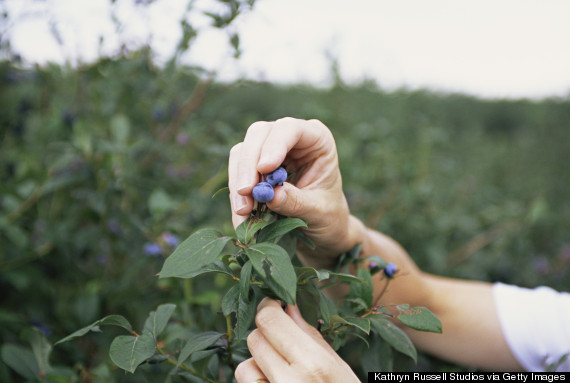
blueberry bush
At least, according to the University of Maine.

3. They can be used as a natural food dye.
And legend has it that early American colonists boiled them with milk to make gray paint, according to the Produce for Better Health Foundation’s Fruits & Veggies More Matters campaign.

4. The perfect blueberry should be “dusty” in color.
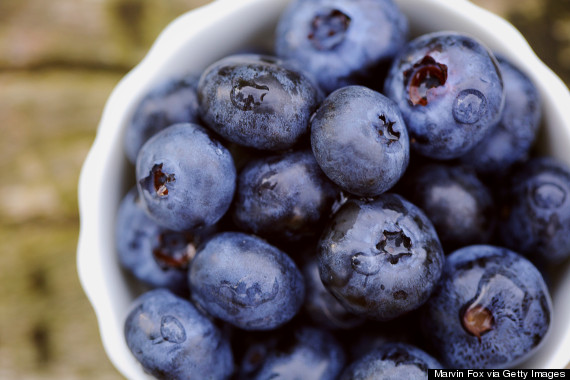
blueberries dusty

5. But don’t wash off that “dust” until you’re ready to dig in.
A rinse softens your blueberries, which can quicken spoiling, according to the University of Texas MD Anderson Cancer Center.

6. The blueberry bush is a relative of the rhododendron — and the azalea.
rhododendron
And along more intuitive lines, also the cranberry.

7. Many blueberry-flavored processed foods do not contain any real blueberries.
Products like bagels, cereals, breads and muffins from brands like Kellogg’s, Betty Crocker and General Mills were reported to use combos of sugar, corn syrup, starch, oil and artificial flavors and dyes to create their own mock blueberries, according to a 2011 Consumer Wellness Center investigation, the LA Times reported.

No Image

5 Surprisingly Delicious Uses For Coconut Oil

July 12, 2014 0

This healthy fat can transform popcorn, garlic bread and even fried chicken, as these creative recipes from Sasha Seymour’s new book Coconut Every Day show.

By Lynn Andriani

Like Us On Facebook |
Follow Us On Twitter

No Image

‘How I Cut My Food Budget $600 in 6 Months’

July 11, 2014 0

By Kali Geldis, Credit.com

I opened up my budget tracking tool last November and my jaw dropped — I had spent $1,200 on food that month. That’s when I knew I had to make a change.

Now, a few notes about that $1,200 total: That includes groceries, restaurants, bars and fast food. Also, November was a month I prepared Thanksgiving dinner, which meant I spent about $125 just to make a couple of pies and cook a turkey for six people — an out-of-the-norm expense for me. Also, I often buy groceries for both my fiance and myself. However, that $1,200 number stuck with me — I needed to make a change and cut the amount of money I was spending on food every month.

It’s no surprise that food was a big budget-breaker for me — it’s one of the most common expenses on which financial planners see clients spending too much money. I definitely felt like I was throwing money away. After all, if I could cut even just $300 (25 percent) off of that monthly balance, that would mean $3,600 a year. There are so many other ways I could use that money — paying for a vacation, investing more money in an individual retirement account, saving for a down payment on a home, paying for a wedding…

It was when my now-fiance proposed over Christmas that the reality struck me — I knew I needed to buckle down and cut my food spending by a lot. Weddings are expensive, and the money that was going toward nights out and nice dinners with friends was wrecking my budget. While I wasn’t going into debt, I realized it was just a matter of time. And debt is something I strenuously avoid. (I never carry a balance on my credit cards and am constantly monitoring my credit scores for free on Credit.com to make sure my credit utilization level is low.)

How I Cut My Food Spending in Half

If I was going to start cutting my food spending, I needed new rules for myself.

Rule #1: Pack lunch for work. A simple step, yes, but I realized that I don’t need to pack a lunch every day for work, just pack supplies for a lunch once a week. I realized I could get a big supply of baby spinach, some dried cranberries and some salad dressing and have enough to last me for lunches the entire week. It made packing a lunch less of a hassle, and helped me avoid ordering lunch to the office on Seamless on a daily basis. (I do let myself order every once in a while, though.)

Rule #2: Make grocery shopping a priority. I’m a New Yorker, so stocking up on groceries for the week is a bit more difficult than hopping in my car, filling up my cart and heading home. I have to carry all my groceries from the store to my apartment, and a week’s worth of food is shockingly heavy. I opted instead to use Fresh Direct to order groceries every week. Even though I know I’m not getting the best deal on every item I buy, I know that by regularly filling my fridge, I’m not ordering a $25 meal from an online food delivery service. The savings add up.

Rule #3: Just say no. Part of my food spending problem was that I would go out with friends and feel pressured to order another round of drinks, splurge on dessert or get a bunch of appetizers for the table. I deserved it, right? I had to learn some self-control and think about the bigger expenses I really wanted — owning a home in a few years, saving money for my upcoming wedding (and the awesome honeymoon we want), and planning for a fully-funded retirement (yes — I’m a millennial who is thinking about retirement, we do exist!).

I looked at my food spending in May — it’s down to about $600, a huge accomplishment for me. It took me about six months to really get into a groove with these new habits, but the payoff is big. My fiance and I are on track to save more than $1,000 a month for our wedding, and we’re hoping to have a little left over to save for the other big costs down the road.

This post originally appeared on Credit.com. Kali Geldis is Credit.com’s Editorial Director. She writes about a wide range of personal finance and credit topics. She previously ran MainStreet, the personal finance website powered by TheStreet. She has also worked for The Wall Street Journal as a Dow Jones Newspaper Fund intern and at The Huntington Herald-Dispatch as a reporter.

No Image

Give Your Pantry A Makeover With These Simple Celebrity Solutions

July 11, 2014 0

“Keeping it green” is the new black. Now that it’s hot out you may find that you are naturally incorporating more green produce and products into your diet. Check out some of our favorite celebrity tips for keeping it green this summer.

5 Simple Steps Towards a Greener Pantry.

1. Clean- Out with the old and in with the Green. It’s a great time to clean out your fridge and pantry to make more space for healthier foods. Wipe down surfaces and use baking soda to absorb any lingering odors. Erica Reid, author of The Thriving Child says, “Get familiar with non-toxic and eco-friendly cleaning lines to reduce toxin exposure in the kitchen: like- Honest Company, Seventh Generation, Ecover, Method, or Mrs. Meyers.”

2. Spice it Up- Part of creating delicious meals is having a range of spices and herbs to choose from. Pick fresh herbs at your local farmer’s market or grocery and use to season your dishes. Whatever you don’t use, dry out and save in a glass container for later. Spices tend to go stale after a few months so the key is purchasing in small amounts so you maintain the freshness and save a buck while you’re at it.

3. Get your Greens- Yes, to be more green you have to eat more greens. Embrace all the upward reaching leafy greens that are available. Greens provide an abundance of calcium and loads of antioxidants, help to keep the blood sugar stable, regulate the bowels, and balance out cravings. Try them raw in salads- arugula, mache, mesclun mix, mizuna, or cooked- Mustards, collards, kale, swiss chard, broccoli rabe. There’s a whole world of greens out there just waiting for you to explore.

gabrielle union

Our girl, actress Gabrielle Union who’s a recent green juice advocate went from eating overcooked collard greens to juicing her greens for optional health and ultimate freshness!

Gabby’s Greens recipe

1 red beet

1 green apple

2 cups kale

1⁄2 lemon

1 inch piece of ginger

Run these ingredients through a juicer and enjoy.

4. Keep it fresh- I mean two things here: 1. eat the fresh seasonal foods that are available, and 2. introduce new and exciting dishes, and methods of preparation to your culinary repertoire. It gets boring eating the same old thing, prepared the same old way all the time. With the changing season try incorporating some new techniques and recipes that will inspire you to eat healthy and celebrate this new shift.

june ambrose

Check out fashion authority June Ambrose’s Kale & Brussels Sprouts Salad. Brussels Sprouts and kale have anti-inflammatory, antioxidant, and detoxification properties. It only takes 100 calories of kale to provide over 350 milligrams of omega-3 fatty acid (alpha-linolenic acid, or ALA). So a little goes a long way.

1/4 cup fresh lemon juice
2 tablespoons Dijon mustard
1 tablespoon minced shallot
1 small garlic clove, finely grated
1/4 teaspoon kosher salt plus more for seasoning
Freshly ground black pepper
2 large bunches of Tuscan kale (about 1 1/2 lb. total), center stem discarded, leaves thinly sliced
12 ounces brussels sprouts, trimmed, finely grated or shredded with a knife
1/2 cup extra-virgin olive oil, divided
1/3 cup almonds with skins, coarsely chopped

Take the lemon juice, dijon, garlic and shallot, and part of the olive oil, sea salt and pepper and wisk until blended evenly or blend on high speed until emulsified.
Toss the remainder of the ingredients: kale, brussels sprouts, almonds in a mixing bowl. Then add the remainder of olive oil and toss. Add the dressing and toss when ready to serve.

5. Pack a Mobile Pantry- It can be challenging to eat well when you are constantly on the go. Places that serve healthy lunches and snacks are scarce compared to the plethora of fast food joints out there. One way to set yourself up for success is to pack a mobile pantry. Pack a selection of easily transportable foods that you can munch on throughout the day when you find yourself hungry. This will help keep you away from the vending machines, delis, and help to regulate cravings. Pack fruit, protein bars, nuts, seeds, crackers, a dip with sliced veggies.

bryant terry

Chef Bryant Terry, food activist and author of Afro- Vegan says “I keep coconut water in the fridge. Coconut water is one of my essential ingredients, especially during the summer when I’m really trying to stay hydrated. I also pack snacks for my daughter including rice crackers and nuts or granola.”

Click here to read more by Latham Thomas.