No Image

Brooklynization of the Berkshires
August 11, 2014 0

2014-08-09-themeatmarket_copyright_findeatdrink.jpgPhoto: Find. Eat. Drink.

Cultural places in the Berkshires like Tanglewood, Mass MoCA, Jacob’s Pillow and the Williamstown Theater Festival have traditionally stolen the headlines as the stars of this picturesque region, but the locavore food and drink movement is shifting the spotlight. Artisan butchers, brewers, distillers, coffee roasters and Brooklyn chefs have set up shop here to take advantage of the local bounty and are bringing an urban vibe to rural Western Massachusetts. Take a long weekend to explore what the region has to offer with this guide from Find. Eat. Drink., which includes eating & drinking recommendations from local Berkshires chefs.
2014-08-08-combo_themeatmarket_3final.jpgPhoto: Find. Eat. Drink.

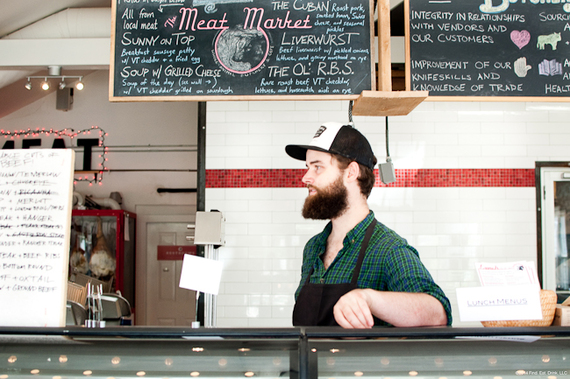
The Meat Market in Great Barrington
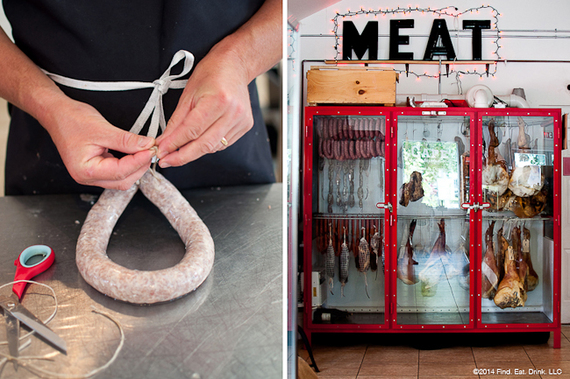
CIA-grad chef Jeremy Stanton worked in kitchens in the Berkshires, Florida and New York before opening his butcher shop and cafe, which offers heritage breed animals sourced from small independent Berkshires farms. They sell custom-cut meats, as well as house-made charcuterie, grass-fed burgers, sausages, sandwiches and pig face tacos to take away or have lunch there.

Chef Brian Alberg of The Red Lion Inn, who does his own in-house butchering, has a lot of respect for fellow chef Stanton. “Everything is locally sourced at this nose-to-tail butcher shop and cafe. They buy directly from the farmers within a 100-mile radius and their products and charcuterie are delicious. The lunch specials here are always great.”

Chef Stephen Browning of Prairie Whale calls this one of his favorite places for lunch. “The food is super good and simple. I get the liverwurst sandwich or the Cuban sandwich and their sausages. Sometimes, they have slow-roasted goat on the menu.”

2014-08-08-prairiewhale_copyright_findeatdrink.jpgPhoto: Find. Eat. Drink.

Prairie Whale in Great Barrington
Restaurateur Mark Firth was one of the pioneers in the Brooklyn restaurant scene, first with Diner in Williamsburg, followed by Marlow & Sons, Roman’s, Reynard and Achilles Heel. Former Marlow & Sons chef Stephen Browning was brought up from the city to cook at Firth’s farm-to-table restaurant Prairie Whale.

Chef Daire Rooney of Allium Restaurant + Bar recommends coming here for brunch. “I love the relaxing atmosphere and chef Stephen Browning’s great fresh vegetable-and-egg pairings, polenta, house-made sausage, poached eggs and killer scones.”
2014-08-09-combo_sixdepot_copywright_findeatdrink.jpgPhoto: Find. Eat. Drink.

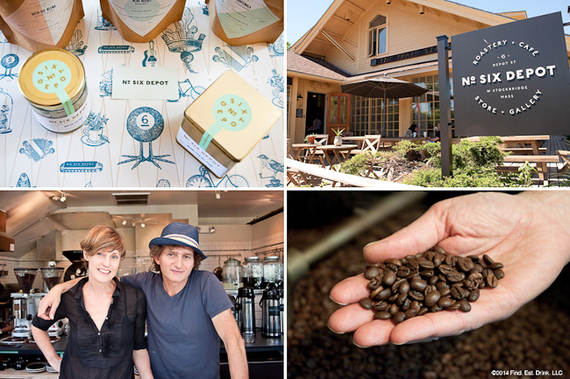
Six Depot in West Stockbridge
Chef Flavio Lichtenthal worked at Al Di La Trattoria in Park Slope, but had a second house in the Berkshires and now lives here full time. He and his wife, Lisa Landry, have opened up a cafe, coffee roaster, tea house, artisanal food shop and art gallery in a former train station in West Stockbridge.

Chef Scott Cole (of The Monterey Store) used to be the chef at Pomo d’Oro, which was located in the same building that now houses Six Depot and likes to drop by for coffee. “I love their coffee blends and I like the Seck-Sie in particular. I stop in for the Shakerato. It’s espresso with a little simple syrup and then shaken in a cocktail shaker so it gets an amazing crema.”
2014-08-09-nudel_4_fb.jpgPhoto: Nudel

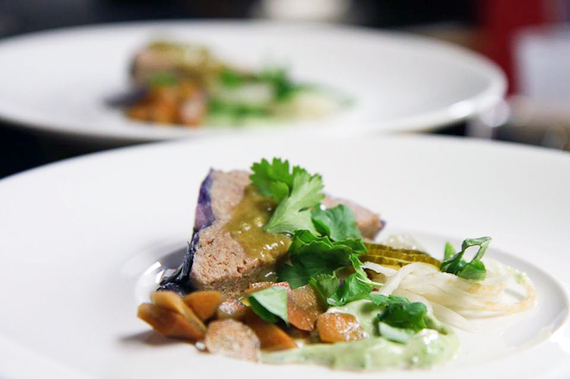
Nudel in Lenox
Bjorn Somlo is the chef of Nudel in Lenox. Before opening his small cafe with an ever-changing menu based on farm-fresh ingredients, he worked locally at John Andrews in South Egremont and at Applewood in Brooklyn.

Chef Stephen Browning of Prairie Whale sources from many of the same farms as Nudel but compliments Bjorn for his unique style. “He creates small plates that are modern, rustic, and funky. He’s very inventive.”

Chef Dan Smith of John Andrews recommends sitting at the open-kitchen counter to watch Bjorn cooking. “He has a die-hard commitment to seeking out local products and he has such a great technique. His food is consistently fresh from the farm, interestingly prepared and delicious. The atmosphere is alive, yet totally relaxed.”
2014-08-09-combo_wanderingstar_1copyright_findeatdrink.jpgPhoto: Find. Eat. Drink.

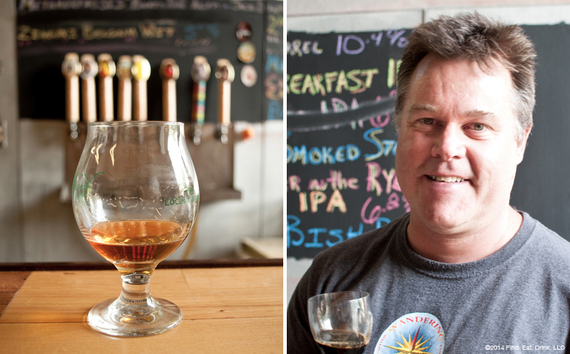
Wandering Star Craft Brewery in Pittsfield
Brewmaster Chris Post was a Manhattan Wall Street trader whose life changed one afternoon when he was online daydream surfing and found the contents of a Michigan brewpub for sale on eBay. Post bought the equipment, left his job and learned the ropes of the brewing business working at Chelsea Brewing Company and Greenpoint Beer Works. His beer can be found in pubs and restaurant in the Berkshires and all over New York City.
2014-08-09-berkshiremountain_copyright_findeatdrink.jpgPhoto: Find. Eat. Drink.

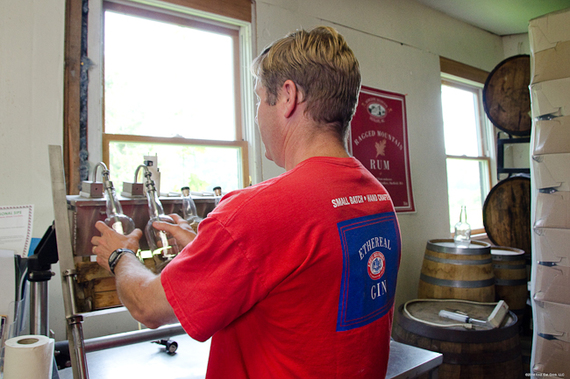
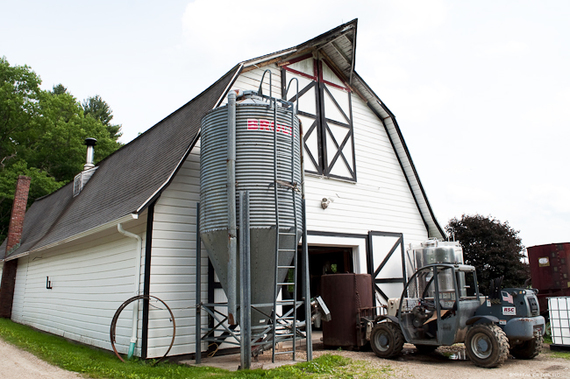
Berkshire Mountain Distillery in Sheffield
Since 2007, founder Chris Weld has been making award-winning craft spirits out of an old barn on his property in Sheffield.
2014-08-09-berkshiremountain_copyright_findeatdrink1.jpgPhoto: Find. Eat. Drink.

Weld’s artisanal spirits include Greylock Gin, Ethereal Gins, Ragged Mountain Rum, Ice Glen Vodka, Berkshire Bourbon and New England Corn Whiskey, which are available in 19 different states. You’ll also see his spirits on the shelves at highly regarded cocktail bars like PDT in Manhattan’s East Village. Visit his soon to be opened new distillery and retail location.

Restaurateur and mixologist Nancy Thomas of Mezze Bistro + Bar is a fan of the limited edition Ethereal Gin. “It’s made locally and it’s delicious with a pine-y quality.

Want more eating and drinking recommendations in the Berkshires? Get the full guide with insider recs from chefs, bartenders, sommeliers and restauranteurs. Download the Find. Eat. Drink. iPhone app here.

No Image

Slab Pie Recipes That Prove The Circle Isn’t The Best Shape

August 11, 2014 0

There’s a lot to love about pie. You can fill it with any flavor you want — we found 60 different ones that are pretty special — it comes packaged in a buttery, flaky crust; and, it’s always happy to be topped with ice cream. Awesome in every way.

No Image

Oatmeal Cookie Recipes That Are Anything But Wholesome

August 11, 2014 0

Oatmeal raisin is the Goody Two-Shoes of the cookie world. Chocolate Chip is the popular one. Peanut butter is the fun one. Macaroons are the rebellious ones. But oatmeal raisin is wholesome through and through. Which is why when it comes to cookies, o…

No Image

Chocolate Cruise Puts The Booze Cruise To Shame

August 11, 2014 0

The world is officially a wonderful place. Not only can you take a cruise to one of your favorite glorious locations, but you can now do so while enjoying one of the earth’s most glorious creations — chocolate.

Princess Cruises has partnered with No…

No Image

5 Supereasy Avocado Recipes Beyond Guacamole

August 9, 2014 0

The healthy green wonder isn’t just for chips and dip. One taste of these amazing dishes and you just might be signing up for the Avocado of the Month Club.

By Lynn Andriani

Like Us On Facebook |
Follow Us On Twitter

No Image

Where’s the B-12? Include Animal-Based Foods in the Global Malnutrition Agenda

August 8, 2014 0

August 18 marks the 500-day countdown to the deadline for achieving the United Nations’ Millennium Development Goals, so we should expect to see increased discourse on where the gaps lie.

Development experts are beginning to take note that, although progress has been made in reducing the percentage of the world’s people who are hungry, nutrition has not received the attention it warrants. In May 2014, at the Chicago Council on Global Affairs Global Food Security Symposium, the United States Agency for International Development (USAID) announced a new “multi-sectorial nutrition strategy” to target chronic malnutrition and stunting in children.

2014-08-07-7136424889_2d7a131a4c_k.jpg

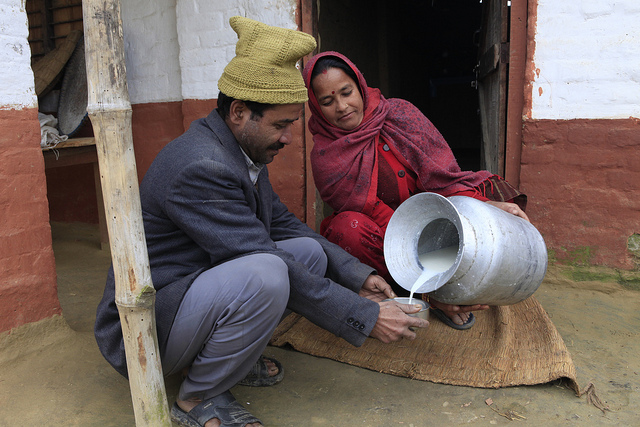
On July 23, 2014, Heifer International and The Alliance to End Hunger co-hosted the event “Livestock for Livelihoods” on Capitol Hill in Washington, D.C. Senator John Boozman (R-Ark.), co-chair of the Senate Hunger Caucus sponsored the event. The discussion raised awareness of U.S. policymakers, administrators, institutional funders and development agencies on the many roles of livestock in nutrition, poverty alleviation and economic development among smallholder farmers.

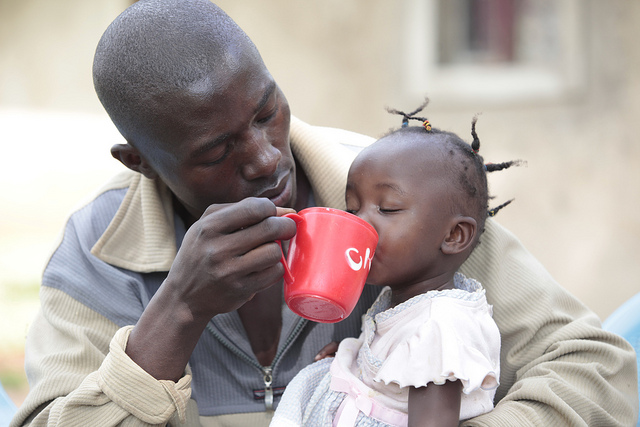
For those of us living in wealthy countries, where obesity far overshadows chronic hunger as the more pressing health concern, it’s easy to forget: hunger is about more than not having enough calories. Inadequate micronutrient intake has far and wide-reaching effects, from cognitive impairment, poor immune systems and decreased productivity, all of which compounds into global economic losses and worse. According to the World Food Programme, 25 percent of the world’s children are stunted, meaning they are significantly below the median height for their age. We must solve the nutrition crisis before we lose a generation of children to lifelong cognitive and physical impairment.

Calcium, protein, vitamin B-12 and iron are essential to human health. Animal-based foods are an important source of these micronutrients, and where we at Heifer work, they’re sometimes the only source readily available. For example, outside of commercially fortified grains, the only source for B-12 is animal products. The world’s poor don’t have access to vitamin-fortified bread. They live in difficult circumstances on difficult land. The communities and families we work with both ask for and benefit from the inclusion of livestock on their farms. This is especially critical for individuals with HIV/AIDS, for whom adequate nutrition is essential to the success of antiretroviral therapies.

At the Livestock for Livelihoods event, David Bunn with the University of California, Davis said, “One of the big trends among international nutrition organizations is they support homestead food production: dark leafy greens and potatoes. But in the last 10 years they’ve turned to livestock, and the reason being, science in the last decade has produced research results that are very clear that the micronutrients that are key for children under three years of age, the best possible source of those nutrients are animal-based sources.”

2014-08-07-9253601595_94186bf3c5_z.jpg

When carefully managed through strengthening of crop-livestock integration, training in animal well-being and sustainable agricultural systems, livestock can yield substantial returns. Even on small plots of land, livestock ownership translates into increased family nutrition and household income. When part of a holistic community development model like Heifer’s, livestock can be the key to achieving dignified income levels, community resilience and strong local economies. A carefully managed Livestock Revolution, with smallholder farmers at the center, has the potential to do more to end extreme hunger and global poverty than did the Green Revolution.

Consider chickens and their eggs. One egg provides six grams of protein; calcium; vitamins A, D, B-12 and B-6; iron and magnesium, all of which are necessary for optimal human health. A typical starter flock we provide to a smallholder farming family is 10-50 chicks, which, when they are old enough, together can lay up to 2,570-12,850 eggs a year. Chickens require a modest amount of space and investment in infrastructure, and growing the flock can be done rapidly. A farmer can easily double her monthly income selling surplus eggs and young laying hens.

Bunn also stated, “I work mostly with chickens in the developing world [in Africa and Nepal]. Commonly, a household would have seven to 10 birds. Without any intervention, a typical woman [raising chickens] in Africa gets 10 to 25 percent of her income selling those scrawny little chickens. With improvements, you can triple or even quadruple that income. It’s life-changing. So this is key. The good news is that the demand for local chicken and eggs is very strong. In fact, they often go for higher prices than commercial. [Improving chicken production] is something that people in remote, rural areas can do for themselves, without that much outside intervention. They can make that change and step up.”

Livestock yields benefit beyond the obvious, too. Have you ever looked at a cow and seen a lamp by which children can do their homework in the evening? Or thought of a goat as an emergency savings account? The things we have the luxury to take for granted — lighting, cooking fuel, a financial cushion — are never guaranteed to smallholder farmers and their families where we work. Biogas, natural fertilizer, asset growth, workload reduction, social status and beyond are the tangible and intangible benefits livestock give at the individual and family level. These facts are especially true for smallholder women farmers, who are at an added disadvantage beyond their male counterparts.

Peter Kappelman, Heifer International board member and Wisconsin dairy farmer, said, “I want to remind you of the special advantage of cattle, goats, yaks and other ruminant livestock. Because of their built-in fermentation vat, they can take the grasses and forages grown on hilly and rugged land — that is not suitable for vegetable or grain production — and turn it into high-quality protein food. They can similarly make use of the fodder that remains after grain harvest, and the fiber that remains after grain and oilseed processing, like soybean meal, and turn that into high-quality protein food as well. And they give you high quality fertilizer for free. Farmers that integrate crop and livestock production are really the ultimate recyclers. The land feeds the livestock, and the livestock feeds the land.”

In addition to livestock, Heifer uses training in our 12 Cornerstones for Just and Sustainable Communities and the formation of cooperative groups to build resilient communities. Heifer works diligently to connect smallholder farming communities to markets in what we call pro-poor, wealth-creating value chains. Changes in fundamental values, especially loyalty to the community and increased self-reliance are the results of the hard work our farming families put in, attending trainings together, and the significant sacrifice that comes from passing on to their neighbor the first female offspring from their gifted livestock.

At Livestock for Livelihoods, Antonio Rota of the United Nations International Fund for Agricultural Development said, “We still need to work with the poorest of the poor, building their assets, getting them access to services. When you don’t have veterinary services, vaccines such as for Newcastle disease cannot reach the producer. When there is no microcredit system, when there is no infrastructure, there are no roads. Building a road makes a huge difference in a community, where suddenly farmers have better access to markets. We still have to invest in the bottom of the pyramid.”

2014-08-07-6392400599_829b84f381_z.jpg

According to the United Nations, there are 600 million smallholder farmers and herders out there, and they are at the heart of the solution to nutritiously feeding the world’s current and growing population. Heifer and other organizations like us have reached but a percentage of them. Our continued and future success is based on integrating the vast smallholder communities, the so-called peasant food web, with the exploding demand for food in both rural and urban markets. Rota said, “If we’re not careful, we promulgate subsistence farming, and we will not achieve the food security and the food production we need.”

In his Livestock for Livelihoods keynote address, Dr. Muquarrab A. Qureshi with the United States Department of Agriculture stated, “I was at a national meeting last week at Texas A&M University in a symposium entitled, ‘The role of poultry industry in feeding the world in 2050.’ The overarching questions that were being asked were, ‘Do we have innovative technologies, genetics, diets and management and marketing systems necessary to meet the animal protein demand of the world in coming decades?’ The unanimous consensus of attendees was ‘Yes. Yes we do.’ We can meet these challenges, not only for the United States, but also for the rest of the world.”

I am encouraged to see large-scale, diverse interest and investments in agricultural systems. We are in an era where a single organization can no longer go it alone and expect to make a dent in hunger and poverty rates. At Livestock for Livelihoods, Sen. John Boozman, (R-Ark.) said, “I believe that hunger is a solvable problem; and there is a role for us to play, but it requires the help and partnership of many, both within government and outside of government. The role of the future is public-private partnerships.” If we are to truly succeed, agricultural development at all levels must pay greater attention to the role of livestock in integrated farming systems.

Photos courtesy of Heifer International.